
Full Description
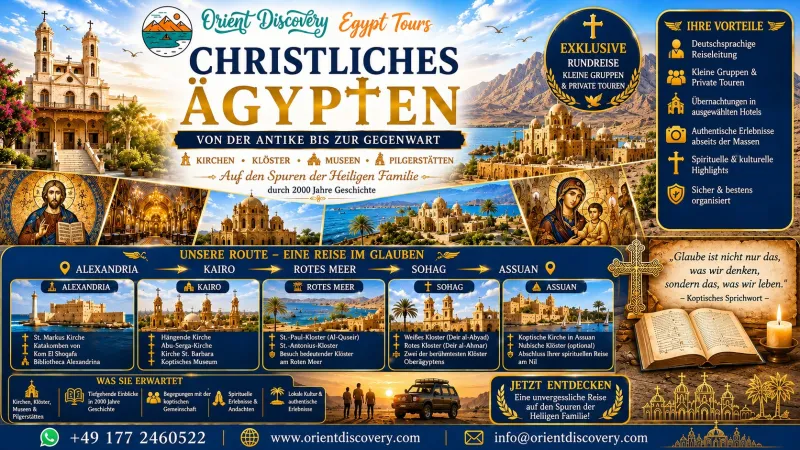
The Christian Egypt Tour takes you across Egypt in eight days to important places connected with Coptic Christianity and the country’s early Christian history. You visit churches, active monasteries, museums and religious sites from Alexandria and Cairo to Upper Egypt and Aswan.
The route does not look at Christian heritage in isolation. The Pyramids, Grand Egyptian Museum, Greco-Roman history and Philae Temple help place the later religious periods in a wider historical context.
You travel privately with a maximum of eight guests, using air-conditioned vehicles and a knowledgeable German- or English-speaking guide.
Important: this tour is currently published as non-binding travel planning and information. The prices shown are for guidance. Before any booking, availability, final price, operating tour company and contractual terms are confirmed separately.
Participants | Vehicle | Indicative price per person |
|---|---|---|
1–2 people | Private limousine | €2,450 |
3–5 people | Private comfortable minibus | €1,900 |
6–8 people | Private comfortable minibus | €1,670 |
Single room supplement: currently €40 per night according to the published page.
The current booking system shows children aged 6–11 at 50% and children aged 0–5 as free. For an eight-day tour with several hotels, the final child price and room arrangement should still be confirmed individually before booking.
Christian Egypt Tour at a Glance
The currently published tour includes:
8 days
7 hotel nights
Private operation
Maximum 8 guests
Modern air-conditioned vehicles
German- or English-speaking expert guide
Cairo
Alexandria
Wadi El Natrun
Monasteries of Saint Anthony and Saint Paul
Sohag
Luxor as an overnight stop
Aswan
Important churches and monasteries
Coptic Museum
Greco-Roman Museum
Pyramids of Giza
Great Sphinx
Grand Egyptian Museum
Philae Temple
Entrance tickets according to the confirmed itinerary
Breakfast at the hotels
8 lunches according to the current inclusions
No planned shopping stops
Who Is This Christian Egypt Tour For?
This tour is not only for religious pilgrims.
It may suit you if you:
Are interested in the history of Christianity
Want to visit Coptic churches
Want to see early monasteries
Enjoy Christian art and icons
Study religious history
Are travelling with a church or parish group
Want to understand Egyptian history beyond the pharaonic period
Prefer private travel to a large group
The route can also work well for theological study groups.
Why Egypt Matters in Early Christian History
Christian communities developed in Egypt very early.
The country later became an important centre for:
Christian theology
Coptic art
Monastic life
Religious literature
Pilgrimage traditions
Some of the earliest forms of Christian monasticism are closely linked with Egypt.
The tour follows this development geographically from the Mediterranean coast through Cairo and into Upper Egypt.
Why the Tour Also Begins with Ancient Egypt
Day 1 starts with the Pyramids, Sphinx and Grand Egyptian Museum.
At first, this may seem unusual on a Christian-focused tour.
Historically, however, it makes sense.
Christianity developed in a country whose religious, artistic and cultural traditions were already thousands of years old.
The first part of the tour therefore helps you understand the wider historical setting.
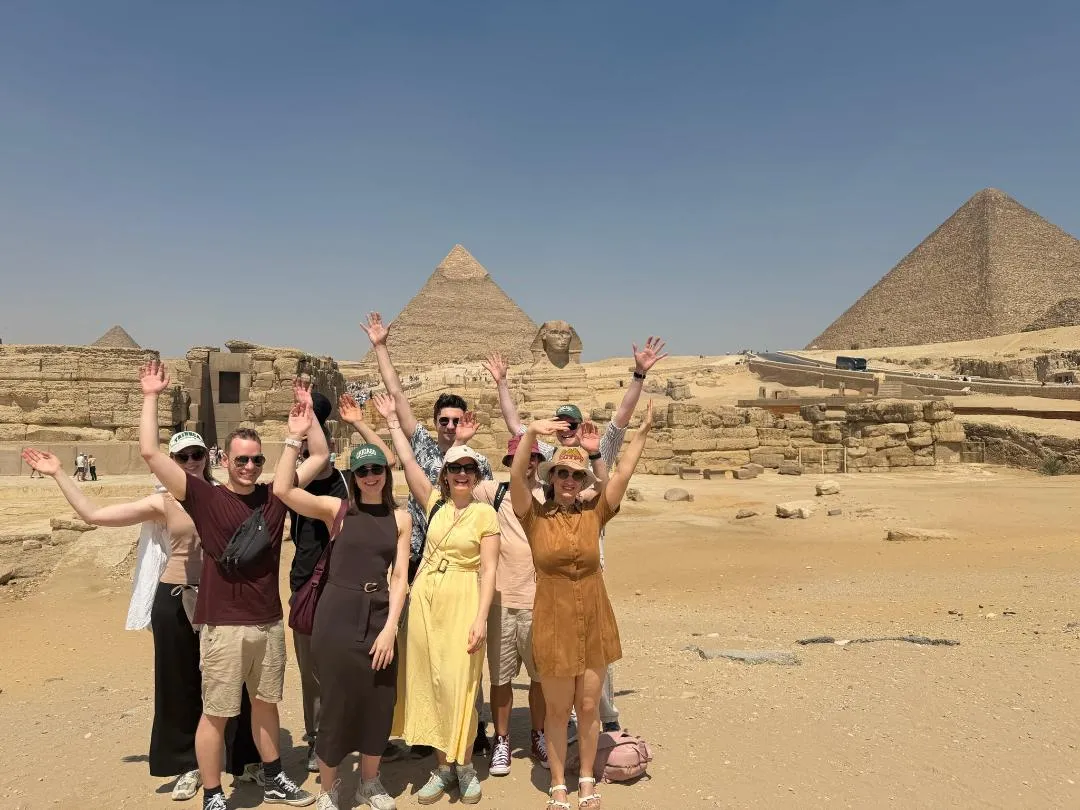
More about the Pyramids of Giza:
Day 1 – Cairo: Pyramids, Sphinx & Grand Egyptian Museum
The tour begins in Cairo.
The focus of the first day is pharaonic Egypt as historical background for the later periods.
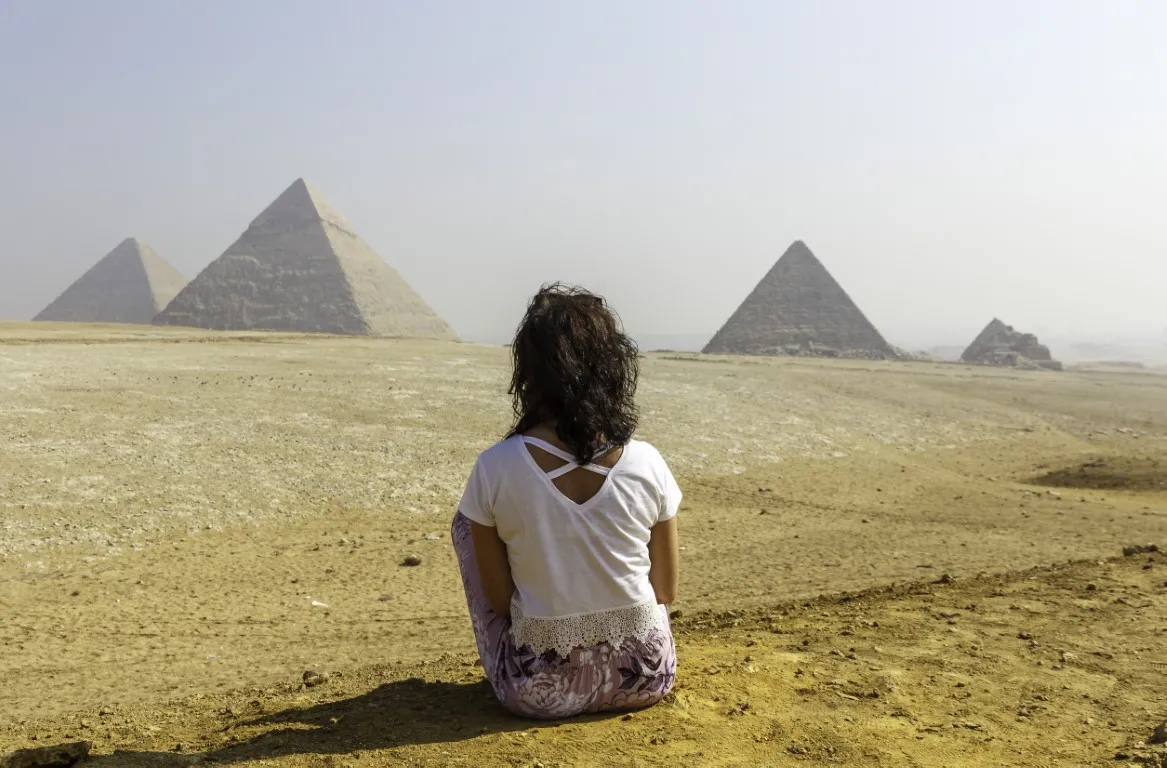
Pyramids of Giza
You visit the Giza Plateau.
Here stand the major pyramids of:
Khufu
Khafre
Menkaure
Your guide explains the purpose of the pyramids within the royal funerary complexes and places them in the history of the Old Kingdom.
Entry inside a specific pyramid should only be treated as included when it is clearly confirmed for your booking.
Great Sphinx
The visit to Giza also includes the Great Sphinx.
It combines the body of a lion with a human head and is one of Egypt’s most recognisable monuments.
This stop helps introduce the religious ideas of the pharaonic period before the tour later moves into Jewish, Christian and late antique history.
Grand Egyptian Museum
You then visit the Grand Egyptian Museum.
The museum presents the material culture of ancient Egypt through archaeological objects.
The exact route inside depends on:
Current open sections
Visitor numbers
Available time
Museum rules
Overnight in Cairo
After the sightseeing programme, you stay overnight in a selected 4-star hotel in Cairo.
The published tour includes seven hotel nights in total.
Day 2 – Alexandria: Greco-Roman History & Early Christianity
On Day 2, the route continues to Alexandria.
For many centuries, the city was important for:
Trade
Education
Greek culture
Roman history
Jewish life
Early Christianity
Greco-Roman Museum of Alexandria
One of the main stops is the Greco-Roman Museum.
Its collections help explain the cultural links between Egyptian, Greek and Roman traditions.
This period is especially important because early Christianity in Egypt developed within this late antique world.
Saint Mark’s Cathedral in Alexandria
You then visit Saint Mark’s Cathedral.
Saint Mark has a special place in Coptic tradition.
The cathedral is therefore one of Alexandria’s important Christian sites.
Because it is an active place of worship, access may be affected by:
Church services
Religious festivals
Security rules
Church events
Clothing in Active Churches
Modest clothing is sensible when visiting churches.
Recommended:
Covered shoulders
Covered knees
Comfortable clothing
Quiet and respectful behaviour
Religious services should always take priority over sightseeing.
Overnight in Alexandria
After the day’s programme, you stay overnight in Alexandria.
Day 3 – Wadi El Natrun: Early Christian Monasticism
Day 3 takes you to Wadi El Natrun.
The area is one of Egypt’s important historic centres of Christian monasticism.
Several monasteries are still active today.
Visiting Active Monasteries
The published programme refers to several historic monasteries in Wadi El Natrun without fixing one final list for the day.
For that reason, the new page should not guarantee additional monastery names.
The actual monasteries visited should be confirmed before travel.
What Might You See in the Monasteries?
Depending on the monastery, you may see:
Churches
Icons
Religious art
Historic walls
Monastery courtyards
Manuscripts or reproductions
Parts of present-day monastic life
Because these are active religious communities, not every area is open to visitors.
Respecting Monastic Life
An active monastery follows different rules from a museum.
Be mindful of:
Modest clothing
Quiet conversation
Photography rules
Closed areas
Religious services
Your guide explains the local rules.
Return and Overnight in Cairo
After Wadi El Natrun, you return to Cairo.
You stay overnight there again.
Day 4 – Coptic Cairo & Modern Christian Life
Day 4 is devoted to Cairo’s Christian heritage.
You visit historic churches, the Coptic Museum and modern church centres.
Coptic Museum
The Coptic Museum is in Old Cairo near several important historic churches.
Its collection includes:
Icons
Manuscripts
Textiles
Woodwork
Stonework
Religious art
The museum helps explain the connection between late antique, Egyptian and Christian artistic traditions.
Hanging Church
The Hanging Church is one of Cairo’s best-known Coptic churches.
It was built above parts of the old Roman fortress of Babylon.
That position is the source of its name.
Inside, you can see features such as:
Icons
Woodwork
Marble elements
Liturgical areas
Because the church remains active, access may change during services.
Abu Serga Church
You then visit the Church of Saints Sergius and Bacchus, usually called Abu Serga.
A crypt lies beneath the church.
According to Coptic tradition, this site is associated with the Holy Family’s stay in Egypt.
This should be described as religious tradition rather than presented as a proven archaeological fact.
Its spiritual and historical importance remains significant.
The Holy Family in Egypt
Coptic tradition links several places in Egypt with the Holy Family.
These include areas around:
Old Cairo
Wadi El Natrun
Middle and Upper Egypt
Your guide can distinguish between church tradition, archaeological evidence and later accounts.
Saint Mark’s Cathedral in Abbassia
The programme also includes an important modern centre of the Coptic Orthodox Church in Cairo.
This visit shows that the tour is not only about historic monuments.
It also looks at present-day Christian life in Egypt.
Cathedral of the Nativity of Christ
The Cathedral of the Nativity of Christ is also included in the published programme.
It is a modern church building and creates a clear contrast with the historic churches of Old Cairo.
Overnight in Cairo
After the full Christian heritage programme, you stay overnight in Cairo again.
Why an Expert Guide Matters on This Route
The historical periods change frequently during this tour.
You move between:
Pharaonic religion
Greco-Roman history
Late antiquity
Early Christianity
Coptic art
Monasticism
Modern Coptic Christianity
A knowledgeable guide helps connect these subjects clearly.
More about the value of a qualified Egyptologist:
Day 5 – Monasteries of Saint Anthony & Saint Paul
Day 5 moves into the desert region near the Red Sea.
Here you visit the Monasteries of Saint Anthony and Saint Paul.
Both are closely linked with the history of early Christian monasticism.
Monastery of Saint Anthony
Saint Anthony has a major place in the history of early monastic life.
The present monastery stands in a remote desert setting.
During the visit, you may learn about:
Monastic architecture
Churches
Religious art
Historic traditions
Modern monastic life
Which sections are open depends on current monastery rules.
Monastery of Saint Paul
The Monastery of Saint Paul is also part of the day.
The route therefore brings together two important monastic sites in the same desert region.
As with all active monasteries, religious events may affect access.
Long Drives and Desert Location
This day includes longer driving sections.
The monasteries are not located inside a compact city centre.
Expect:
Longer transfers
Dry surroundings
Heat depending on the season
Walking inside the monastery areas
Overnight on the Red Sea Coast
After visiting the monasteries, an overnight stay on the Red Sea coast is planned.
The current structured itinerary names Safaga as the overnight location.
Day 6 – Sohag: White Monastery & Red Monastery
On Day 6, you continue into Upper Egypt.
In the Sohag region, you visit two important early Christian monastic sites.
White Monastery
The White Monastery is known for its monumental architecture.
Its name refers to the light-coloured building material.
The visit focuses on the monastery’s religious and architectural importance.
Red Monastery
The Red Monastery is especially known for its surviving wall paintings.
The decoration is an important example of early Christian art in Egypt.
This is one of the places where the artistic richness of Christian Egypt becomes especially clear.
Active Religious Sites
These monasteries are not simply museum buildings.
Visitors should:
Dress respectfully
Avoid disturbing services
Follow local photography rules
Stay out of closed areas
Continue to Luxor
After Sohag, the route continues to Luxor.
Luxor mainly serves as the overnight stop before continuing towards Aswan.
Overnight in Luxor
According to the current itinerary, you stay overnight in Luxor.
Day 7 – Aswan: Philae & Modern Coptic Life
Day 7 continues to Aswan.
The programme again connects ancient religious history with Christianity today.
Philae Temple
You first visit Philae Temple.
The complex was an important centre of the cult of Isis for a long period.
It is also a useful place for understanding religious change in late antiquity.
Parts of the site were later used by Christians.
Why Philae Fits This Christian Egypt Tour
Philae was not originally a Christian monument.
That is exactly why it works well on this route.
It helps explain the transition between:
Traditional ancient Egyptian religion
Roman rule
Late antiquity
Christian period
The site gives useful context for Egypt’s changing religious life.
Boat Ride to Philae
Philae is on an island and is reached by boat.
Getting on and off the boat should be considered in advance for guests with limited mobility.
Cathedral of Archangel Michael
Later, you visit the Cathedral of Archangel Michael.
This stop introduces modern Coptic community life in Aswan.
Day 7 therefore ends not only with history, but with a living religious community.
Overnight in Aswan
The seventh and final hotel night is in Aswan.
That matches the published total of 7 hotel nights for an eight-day tour.
Day 8 – Monastery of Saint Simeon & Departure
On the final day, you visit the Monastery of Saint Simeon near Aswan.
The site stands in a dry desert setting outside the densely built city area.
Monastery of Saint Simeon
The surviving walls give an impression of early Christian community life in Upper Egypt.
During the visit, you see a different form of Christian architecture from the sites in:
Cairo
Alexandria
Wadi El Natrun
Sohag
This makes the monastery a suitable final stop on the route.
Access to the Monastery of Saint Simeon
The location can be more physically demanding than a normal city visit.
The exact access should be checked in advance if you have:
Limited walking ability
Knee problems
Strong sensitivity to heat
A wheelchair
Tour Ends in Aswan
After this visit, the tour ends in Aswan.
The current page lists several onward options that can be arranged separately:
Airport transfer
Further travel to Cairo
Domestic flight to Cairo
Private extension
Transfer to the Red Sea
These should only be treated as included when clearly confirmed in your personal offer.
Why the Tour Ends in Aswan
The route is designed as a one-way programme and does not automatically return to Cairo.
This matters when planning your flights and wider holiday.
If your international flight leaves from Cairo, allow enough time to travel back from Aswan.
7 Hotel Nights, Not 8
The current German page contains an inconsistency.
One section says 7 hotel nights are included.
Another part of the structured itinerary says “2 overnight stays in Aswan” for Days 7–8.
Both cannot be correct.
The logical eight-day structure is:
Night 1: Cairo
Night 2: Alexandria
Night 3: Cairo
Night 4: Cairo
Night 5: Safaga or Red Sea coast
Night 6: Luxor
Night 7: Aswan
Day 8: Saint Simeon Monastery and departure
This also matches the published total of seven hotel nights.
Hotels on the Christian Egypt Tour
The current page lists selected 4-star hotels.
Exact hotel names are not guaranteed on the public page.
That is reasonable for a tailor-made tour because availability changes by date.
Before booking, confirm:
Hotel names
Room category
Location
Single or double room
Breakfast
Any additional meals
Meals
The current inclusions list states:
Breakfast connected with the hotel stays
8 lunches in restaurants
The German page uses the term half board elsewhere.
Because these details do not fully match, I would only treat additional dinners as included when they are clearly stated in the personal offer.
Drinks
Drinks in hotels and restaurants are not included according to the current page.
Plan your own spending for:
Water
Soft drinks
Coffee
Other drinks
No Planned Shopping Stops
The tour is designed around cultural and religious sightseeing.
Planned shopping stops are not part of the core programme.
This leaves more time for:
Churches
Monasteries
Museums
Historic sites
rather than compulsory shop visits.
What Does “Private Tour” Mean?
Private means:
Your own vehicle for your booking group
Maximum 8 guests
Personal guide
No unrelated guests in your vehicle
Easier pace adjustments
More flexible breaks
Private does not mean churches, museums and monasteries are opened only for your group.
Clothing for Churches and Monasteries
At religious sites, modest clothing is recommended.
Useful choices include:
Covered shoulders
Covered knees
Clothing that is not too tight
Comfortable shoes
Some monasteries or churches may have additional local rules.
Photography in Churches and Monasteries
Photography rules differ from place to place.
In some areas, photos may be allowed.
In others, photography may be:
Restricted
Allowed only without flash
Inappropriate during services
Completely prohibited
Ask your guide or local staff before taking photos.
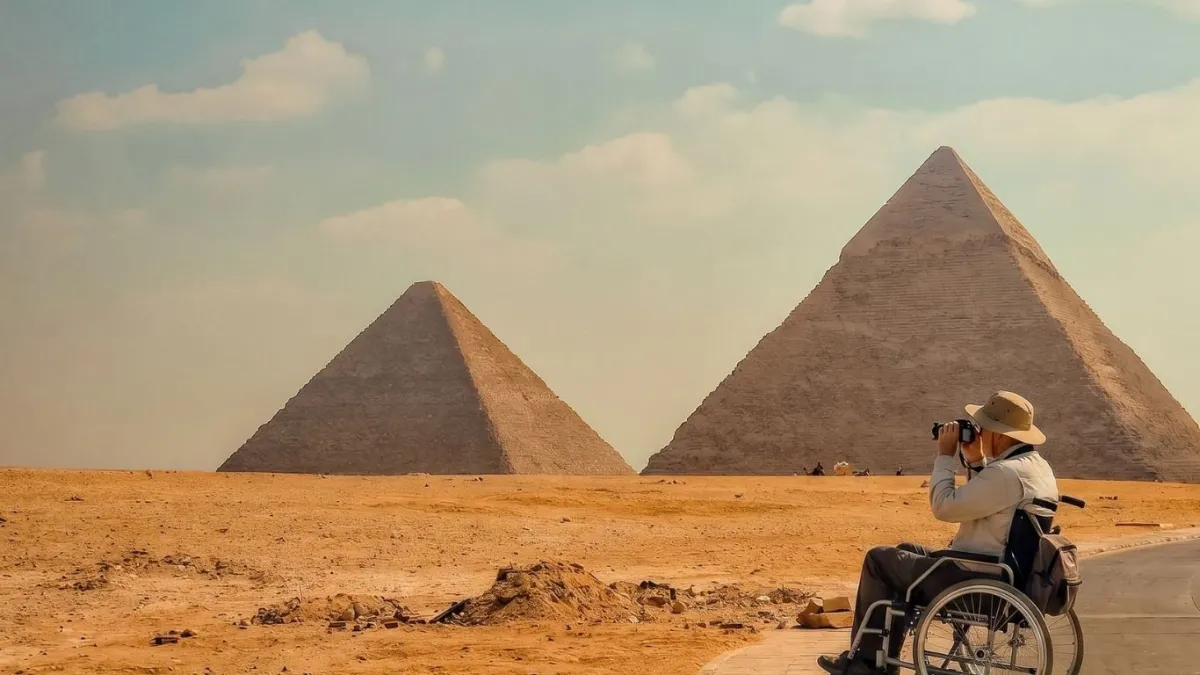
Christian Egypt Tour with Limited Mobility
The live page says the tour may suit many guests with limited mobility.
This should not be understood as full accessibility.
The route includes very different sites.
Possible difficulties include:
Steps in churches
Historic paved surfaces
Longer museum walks
Uneven monastery areas
Desert paths
Boat boarding at Philae
Access to Saint Simeon Monastery
Frequent vehicle entry and exit
The advantage of a private tour is that some parts of the itinerary may be easier to adjust.
More planning advice:
Wheelchairs and Walking Aids
If you use a wheelchair or walking aid, provide clear details before booking, including:
How far you can walk independently
Whether the wheelchair folds
Whether you need help getting into vehicles
Whether you can manage steps
Whether standing for long periods is difficult
This allows the route to be checked more realistically.
You Do Not Have to Enter Every Area
Some churches and monasteries contain extra areas that are difficult to access.
You do not need to visit every:
Basement
Crypt
Narrow passage
Upper level
to experience the main site.
Christian Egypt Tour with Children
Families can also enquire about this tour.
Bear in mind that eight days involving:
Long drives
Museums
Churches
Monasteries
Historical explanations
can be demanding for young children.
Older children interested in history may benefit from the private format because breaks can be adjusted more easily.
Child Price Should Be Confirmed Individually
The current booking system shows:
Children 6–11: 50%
Children 0–5: free
For a tour with seven hotel nights, the final child price should still depend on:
Room arrangement
Hotel rules
Age
Extra bed requirements
Transfer conditions
and should be confirmed in the personal offer.
Long Driving Sections
This tour covers a large part of Egypt.
You travel between:
Cairo
Alexandria
Wadi El Natrun
Red Sea coast
Sohag
Luxor
Aswan
Some days therefore involve long road sections.
If long drives are difficult for you, discuss the schedule carefully before booking.
Breaks During the Tour
A private tour makes it easier to adapt breaks to your group.
That does not mean every day can be extended without limit.
The schedule is still affected by:
Opening hours
Driving distances
Hotel timings
Religious visiting hours
Daylight
Local rules
Best Time to Travel
The route crosses several different climate areas in Egypt.
Alexandria can feel much milder than Sohag or Aswan.
In summer, Upper Egypt and desert regions can become extremely hot.
In winter, mornings and evenings may feel cooler.
For many travellers, autumn, winter and spring are more comfortable for a long cultural tour.
What to Bring
For the Christian Egypt Tour, we recommend:
Passport
Required visa and travel documents
Comfortable shoes
Modest clothing for religious sites
Sun cream
Sunglasses
Sun hat
Personal medication
Light jacket for air-conditioned vehicles
Power bank
Phone or camera
Small day bag
Enough photo storage
Personal Medication
Because the tour lasts eight days and covers several regions, bring enough of any regular medication for the full trip.
Keep important medication in your personal day bag.
Tips
Tips are not included according to the current page.
If you want more guidance about tipping in Egypt:
Entrance Tickets
The current page says entrance tickets for the sights named in the confirmed itinerary are included.
If special extra areas or temporary exhibitions matter to you, check in advance whether additional tickets apply.
Changes to the Order
The current page says that the order can change for operational reasons.
That is sensible on an eight-day tour.
Possible reasons include:
Opening times
Religious events
Hotel availability
Road conditions
Local events
Operating arrangements
The confirmed main sites should remain part of the agreed itinerary.
Planned Inclusions
According to the currently published plan:
Private tour with a maximum of 8 guests
Private air-conditioned vehicles
Knowledgeable German- or English-speaking guide
7 nights in selected 4-star hotels
Breakfast
8 lunches in restaurants
Entrance tickets for confirmed sights
All transfers within the confirmed itinerary
Taxes and service charges
Pyramids of Giza
Great Sphinx
Grand Egyptian Museum
Greco-Roman Museum of Alexandria
Saint Mark’s Cathedral in Alexandria
Monasteries in Wadi El Natrun
Coptic Museum
Hanging Church
Abu Serga Church
Saint Mark’s Cathedral in Abbassia
Cathedral of the Nativity of Christ
Monastery of Saint Anthony
Monastery of Saint Paul
White Monastery
Red Monastery
Philae Temple
Cathedral of Archangel Michael
Monastery of Saint Simeon
No planned shopping stops
Confirm Before Any Booking
Because this is currently published as non-binding travel planning, the following should be confirmed clearly:
Final tour price
Availability
Operating tour company
Contractual terms
Exact travel dates
Hotel names
Room category
Single room supplement
Exact meal basis
Final monastery selection in Wadi El Natrun
Transfer at the end of the tour
Child prices
Mobility requirements
Specific religious or academic interests
Not Included in the Standard Plan
According to the current information:
Drinks in hotels and restaurants
Tips
Personal expenses
Extra services not confirmed in advance
Return flight or transfer from Aswan to Cairo unless arranged separately
Private extension programmes
Christian Egypt Tour for Study or Church Groups
This route may also suit:
Church groups
Theological groups
Cultural associations
Study groups
Private groups of friends
For group bookings, specific academic or religious interests can be discussed in advance.
For example, more focus can be placed on:
Coptic art
Monasticism
Holy Family traditions
Modern Coptic Christianity
Religious history
The transition from late antiquity to Christianity
where time and site access allow.
Enquire About the Christian Egypt Tour
If you want to explore Egypt’s Christian heritage across several regions, you can make a non-binding enquiry for the Christian Egypt Tour on your preferred dates.
Tell us:
Preferred travel dates
Number of adults
Number and ages of children
Preferred room arrangement
Preferred language
Mobility limitations
Dietary requirements
Religious or historical interests
Planned arrival in Cairo
Preferred onward travel from Aswan
Availability, hotels, final itinerary, operating tour company and final price can then be checked.
Only after that are the specific booking conditions provided.