The Valley of the Kings in Luxor is one of Egypt’s best-known historical sites. Hidden among the dry limestone hills of the West Bank are entrances that lead deep into the rock. Behind them lie painted corridors, burial chambers, religious texts and scenes that have survived for more than 3,000 years.
From the outside, the landscape looks quiet and almost empty.
Inside the tombs, that impression changes at once.
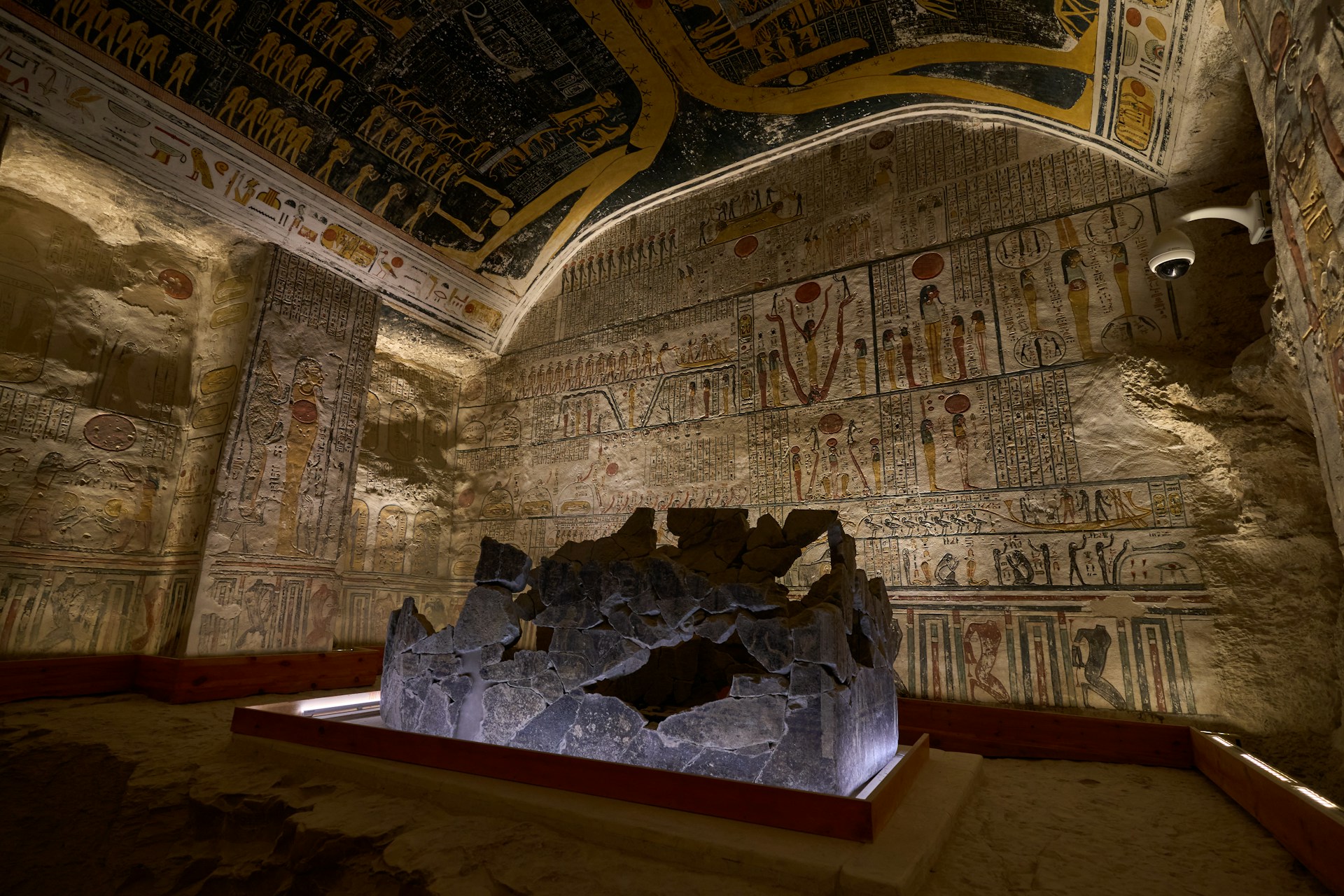
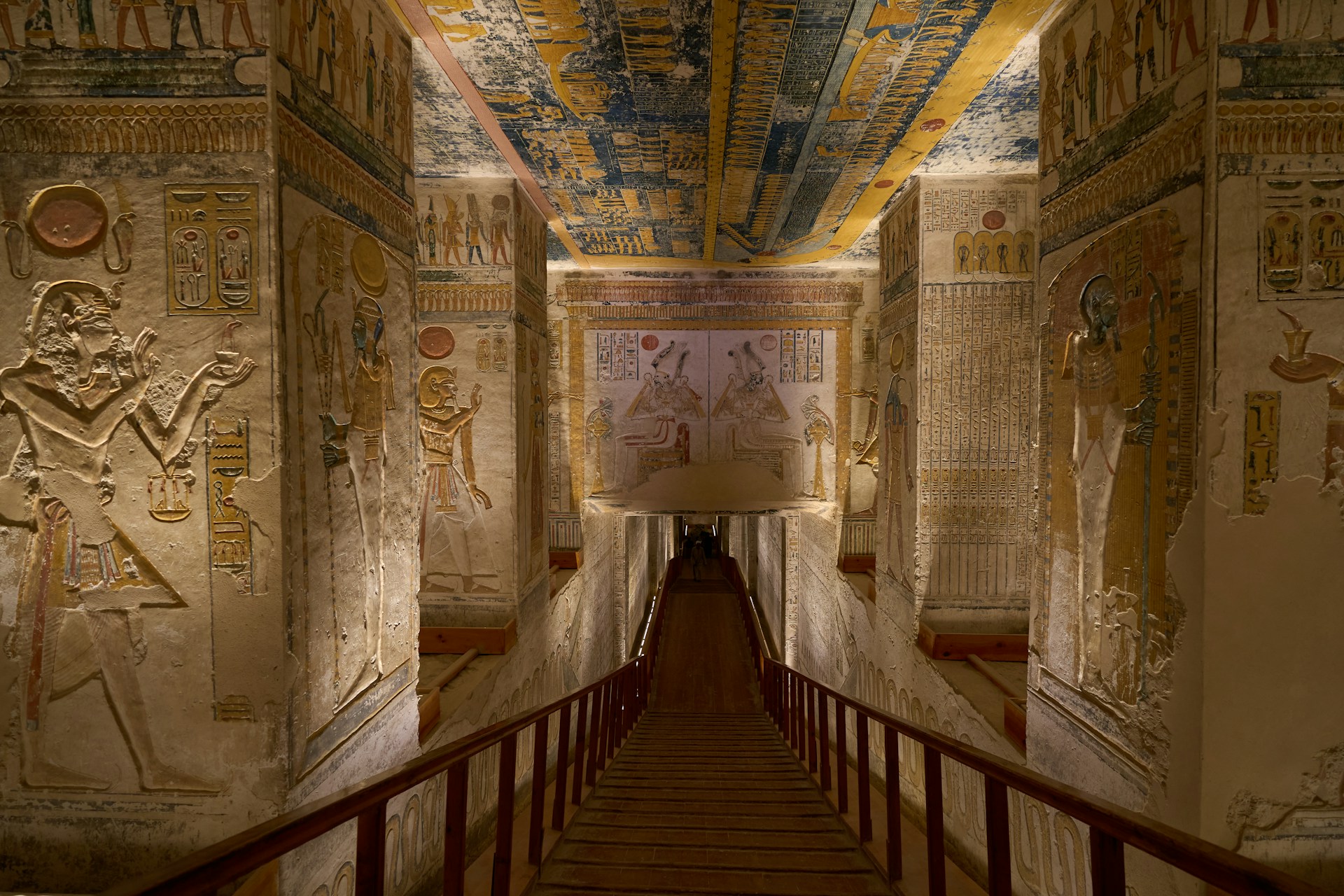
Ceilings glow in deep blue. Stars, gods, snakes and protective beings guide the dead rulers through the underworld. Long hieroglyphic texts explain which dangers they must face and how they can be reborn with the sun god.
During the New Kingdom, the valley became the main royal burial ground of ancient Thebes, now known as Luxor. Kings from the 18th, 19th and 20th Dynasties were buried here, mainly between about 1550 and 1069 BC. Members of the royal family and a small number of important officials were also buried in the area.
More than 60 known tombs have been found, along with unfinished chambers and burial shafts. Not all of them are open to visitors. Tombs may close for conservation, research or protection of their fragile wall paintings.
The best-known tombs include:
Tutankhamun, KV62
Seti I, KV17
Ramesses III, KV11
Ramesses IV, KV2
Ramesses VI, KV9
Ramesses IX, KV6
The most famous is the tomb of Tutankhamun. Howard Carter discovered it in 1922 with a large part of its burial equipment still inside.
Its fame can create the wrong expectations.
Tutankhamun’s tomb is smaller and simpler than many other royal tombs in the valley. Its importance comes mainly from the discovery and the objects found inside.
Travellers who want to see richer wall paintings may find the tombs of Ramesses VI or Seti I more impressive. These tombs normally require separate tickets. Openings and ticket rules should be checked shortly before your visit.
Why the Valley of the Kings Is More Than a Group of Tombs
The valley does not only show where pharaohs were buried.
It explains how ancient Egyptians thought about death, rebirth and life after death.
Death was not seen as a final ending. It marked the start of a dangerous journey through the night-time underworld. The dead king had to pass gates, meet gods and overcome hostile beings.
The paintings and texts on the walls were not simple decoration.
They acted as a religious guide.
The tombs include scenes from texts such as the Amduat, the Book of Gates and other underworld books. These works describe the twelve hours of night through which the sun god travelled before being reborn in the east at sunrise.
The dead pharaoh hoped to share in that rebirth.
This belief also helps explain why the valley lies on the west side of the Nile.
The sun sets in the west. Ancient Egyptians linked that direction with death, burial and the journey into the next world. The sun rose again in the east, which represented renewal and new life.
Why Is the Valley of the Kings a UNESCO World Heritage Site?
The Valley of the Kings forms part of the UNESCO site known as Ancient Thebes with its Necropolis.
The wider protected area includes:
Karnak Temple
Luxor Temple
the Valley of the Queens
Deir el-Bahari
Deir el-Medina
royal memorial temples
and other tombs and monuments on both sides of the Nile
UNESCO added Ancient Thebes and its Necropolis to the World Heritage List in 1979.
The site preserves temples, palaces, tombs and religious landscapes that show the power and artistic skill of ancient Egyptian civilisation at one of its strongest periods.
A visit to the valley is therefore much more than a quick photo stop.
You enter a place where architecture, religion, art and royal authority were closely connected.
The bare mountains may look less dramatic from a distance than a pyramid.
Below the surface waits a world that is far more colourful than the landscape suggests.
Who Should Visit the Valley of the Kings?
The valley is especially worth visiting when you:
are interested in pharaohs and ancient Egyptian history
want to see well-preserved wall paintings
are planning your first visit to Luxor
want to enter famous tombs such as Tutankhamun or Ramesses VI
or want to understand ancient Egyptian ideas about the afterlife
Allow enough time.
Three tombs in a row can be more tiring than they appear on a map. Some entrances include long ramps, steep stairs and warm, narrow corridors.
Rushing inside, taking one photo and moving to the next tomb may allow you to collect more tomb numbers.
It will not necessarily help you understand the valley.
A good visit needs a sensible tomb selection, plenty of water and an early start.
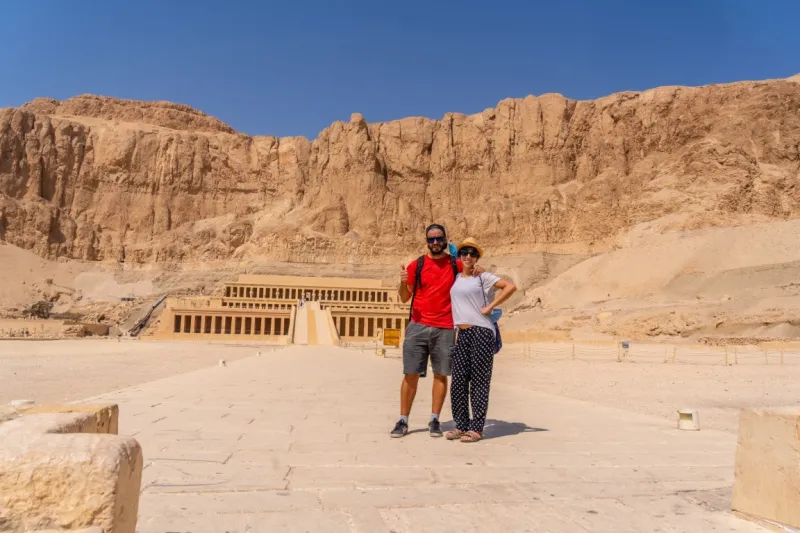
Luxor day tour featuring the Valley of the Kings, Karnak Temple, and the Temple of Hatshepsut. Private small group, German-speaking Egyptologist, no shopping stops, and 24/7 support.
From
A private Luxor day trip can combine the Valley of the Kings with Karnak Temple, Hatshepsut Temple and the Colossi of Memnon. Travellers who want more time inside the tombs, an early-morning visit or a hot-air balloon flight should consider staying overnight.
The strongest impressions are hidden behind the entrances in the rock.
Where Is the Valley of the Kings and Why Were Pharaohs Buried There?
The Valley of the Kings in Luxor lies on the west side of the Nile, around ten kilometres from the modern city centre. It forms part of the Theban Necropolis and sits at the edge of a dry limestone mountain range.
The landscape looks bare and isolated.
That isolation helped make it suitable for royal burials.
Tomb entrances could be hidden among the cliffs more easily than the large, highly visible pyramids of earlier periods. At the same time, the valley remained close enough to Thebes for workers, priests and officials to organise construction and later religious ceremonies.
Today, a paved road leads to the visitor centre. From there, visitors continue into the valley. Depending on current arrangements and ticket rules, you may use a small visitor train or walk part of the route.
The distances between open tombs are not always long.
Heat, dry air and uneven ground can make them feel harder than they look on a map.
An early visit is therefore a sensible choice.
The Natural Pyramid Above the Valley
The mountain of el-Qurn rises above the valley.
Its name can be translated as “the horn”. From certain angles, its pointed summit resembles a natural pyramid.
Some researchers believe this shape may have influenced the choice of the area. The pyramid had long been linked with royal power, rebirth and the sun.
The New Kingdom rulers no longer needed to build a huge stone pyramid.
The landscape already provided a pyramid-like form.
It is not possible to prove that this was the main reason for choosing the valley. Several practical and religious factors probably worked together:
the remote setting
high cliffs
workable limestone
closeness to Thebes
the western location
and the shape of el-Qurn
Ancient Egyptians rarely separated religion, politics, landscape and practical planning as neatly as modern visitors sometimes do.
Why Is the Valley on the West Side of the Nile?
The western location had a strong religious meaning.
Ancient Egyptians saw the daily movement of the sun as a symbol of life, death and rebirth.
The sun rises in the east.
The east was linked with birth, beginnings and renewal.
The sun sets in the west.
At sunset, it disappeared and began its journey through the underworld. The west therefore became connected with death, burial and the next world.
Many important cemeteries were built on the west side of the Nile.
These include:
the Valley of the Kings
the Valley of the Queens
Deir el-Medina
the Tombs of the Nobles
royal memorial temples
and other parts of the Theban Necropolis
The west did not represent death alone.
It also represented hope.
Just as the sun returned every morning, the dead king hoped to be reborn.
The paintings inside the tombs show the pharaoh not as a lifeless body, but as a traveller moving towards renewal.
Why Did Pharaohs Stop Building Large Pyramids?
During the Old Kingdom, many rulers were buried inside or beneath monumental pyramids.
These buildings displayed royal power and showed the pharaoh’s relationship with the gods.
They were also impossible to hide.
Everyone could see where the ruler had been buried.
Complex corridors, blocked passages and heavy stones did not stop tomb robbers forever. Many pyramids were looted in ancient times.
During the New Kingdom, the burial plan changed.
Kings no longer placed their tombs under huge visible monuments. Long corridors and chambers were cut deep into the rock inside a remote valley.
The entrance was meant to remain unnoticed.
The idea was simple:
A hidden tomb should be harder to find and rob.
The plan did not work completely.
Almost every known royal tomb was looted at some point, sometimes only a few generations after the burial.
Tutankhamun’s tomb is the best-known example of a burial that survived with much of its contents still inside.
It was not completely untouched. It appears to have been entered in ancient times. Even so, a very large part of the burial equipment remained.
Its small entrance may have helped. Later building work and fallen debris also covered the doorway.
A young king with a short reign ended up with a better-preserved burial than many more powerful rulers.
History sometimes has a rather unusual sense of fairness.
Why Were the Memorial Temples Built Away from the Tombs?
During the pyramid age, the tomb and the royal cult buildings were closely linked.
In the New Kingdom, these areas were separated.
The hidden tomb stood inside the valley.
The king’s memorial temple stood farther away, near the edge of the fertile Nile land.
Priests used these temples for offerings, ceremonies and the continuing royal cult. They could honour the dead king without revealing the exact location of the burial chamber.
Well-known examples include:
Hatshepsut’s Temple
the Ramesseum of Ramesses II
Medinet Habu of Ramesses III
and other royal temples on the West Bank
The separation had both practical and religious benefits.
The burial remained hidden.
The temple remained visible and accessible.
The king could be honoured while his mummy and burial equipment stayed deep inside the mountain.
At least, that was the plan.
Tomb robbers were also rather good at long-term projects.
Why Was Limestone Suitable for Tombs?
The mountains around the valley are mainly formed from limestone.
The stone can be cut, but it may contain cracks, weak layers and unstable sections.
Workers sometimes had to change a tomb’s direction to follow safer rock.
When they found poor stone, they could:
change the corridor
reduce the size of a room
alter the angle
or cover uneven walls with plaster
This helps explain why the tombs have very different designs.
Some have long, straight corridors.
Others turn several times.
Some descend through steep stairways.
Others remain fairly level and easier to enter.
The rock influenced the building plan.
It did not attend the planning meetings and did not always follow the drawings.
Why Is There an Eastern and a Western Valley?
The area is usually divided into two main parts:
the Eastern Valley
the Western Valley
Most of the famous and regularly visited royal tombs lie in the Eastern Valley. These include Tutankhamun, Ramesses III, Ramesses IV, Ramesses VI and Ramesses IX.
The Western Valley is quieter and contains fewer well-known tombs. It is sometimes called the Valley of the Monkeys because of scenes found in one tomb there.
Most first-time visitors focus on the Eastern Valley.
It contains the visitor centre, the main tourist route and the best-known tombs.
Travellers with several days in Luxor and a strong interest in archaeology may look into additional areas. Openings and access conditions can change.
Why Was the Valley Robbed Despite Its Hidden Location?
The valley was remote.
It was not secret.
Hundreds of workers, artists, supervisors, scribes, priests and officials were involved in building and using the tombs.
Many people knew roughly where the burials stood.
During periods of political and economic trouble, control over the necropolis weakened. Gold, jewellery, furniture and other burial goods became valuable targets.
Some robberies were probably organised.
Later, priests removed royal mummies from threatened tombs and placed them together in hidden caches. They hoped to protect the bodies from further damage.
These reburials explain why some famous kings were not found inside their original tombs.
The valley therefore tells several stories at once:
royal power
religious belief
robbery
political crisis
rescue attempts
and the long afterlife of the pharaohs
What Makes the Setting So Impressive Today?
The contrast shapes the visit.
Outside, you see pale cliffs, dry ground and a landscape with very little colour.
Inside, you find blue ceilings, yellow stars, red figures and carefully drawn hieroglyphs.
The tombs feel like hidden worlds.
That effect was probably part of their purpose.
The entrance led from the visible world of the living into a protected space for the journey after death.
Modern visitors follow a similar route.
You leave the bright sunlight, walk deeper into the rock and suddenly stand in front of scenes that have told stories of death, danger and rebirth for more than three thousand years.
The location was chosen to remain hidden.
Its isolation is now one of the reasons it feels so powerful.
Belief in Eternal Life: Why the Tombs Were So Carefully Decorated
The tombs in the Valley of the Kings in Luxor were not simple places for storing a mummy.
They were designed to help the dead pharaoh survive the dangerous journey through the underworld and be reborn in the next life.
Ancient Egyptians did not see death as the final end of existence. They believed different parts of a person could continue after death when the correct religious conditions were met.
The body needed to survive.
The burial had to follow religious rules.
The tomb became a protected home for eternity.
Its rooms, wall texts, images and objects all had a purpose. They supplied the king, protected him and showed him the route through the night-time world of the gods.
Why Was Mummification So Important?
Ancient Egyptians believed the body needed to be preserved so the dead person could continue living in the next world.
This belief led to the development of mummification.
During the process, the internal organs were treated or stored separately. The body was dried, covered with oils and resins and wrapped carefully in linen.
The dead person still needed to remain recognisable.
Royal mummification was especially detailed. The king’s body was protected with amulets, jewellery and religious symbols.
Each amulet had its own purpose.
Some protected the body.
Others gave strength or guarded the king from dangers in the underworld.
Mummification was therefore more than a method of preserving a corpse.
It was part of a religious transformation.
The dead king was prepared for eternal life.
What Role Did the Tomb Play in the Afterlife?
The tomb was seen as the permanent home of the dead person.
It contained things the pharaoh might need after death.
Depending on the ruler and period, burial goods included:
furniture
clothes
jewellery
weapons
food
containers
statues
chariots
games
personal items
and religious texts
Some objects were made specially for the burial.
Others may have been used during the king’s life.
Small servant figures called shabtis were also placed in tombs. They were expected to perform work for the dead person in the next world.
It was a comfortable idea.
Even in eternity, a pharaoh apparently did not plan to complete every task personally.
The valuable burial goods also attracted robbers. Gold, stones, jewellery and furniture could be sold, reused or melted down.
The king’s religious home became a very earthly source of profit for someone else.
The Journey Through the Twelve Hours of Night
Many wall scenes show the journey of the sun god through the underworld.
After sunset, the god travelled through twelve hours of darkness. Each hour contained gates, gods, protective beings and dangers.
The sun god had to defeat the forces of darkness and be reborn in the morning.
The dead pharaoh hoped to join this journey.
When he passed each test, he could be renewed and continue living with the gods.
The tomb walls were therefore covered with texts and images that explained the route.
They worked like a religious map.
There was no small sign saying “You are here”.
The purpose was still similar.
The texts showed which beings the king would meet, which names he needed to know and which words would protect him.
Which Religious Books Appear in the Tombs?
The tombs contain scenes from several ancient Egyptian religious works.
These include:
the Amduat
the Book of Gates
the Book of Caverns
the Book of the Earth
the Book of the Day
the Book of the Night
and parts of the Book of the Dead
Not every tomb contains the same works.
The selection changed over time. Artistic styles and the way the texts were arranged also developed across the dynasties.
The Amduat
The Amduat describes the sun god’s journey through the twelve hours of night.
Each hour represents a different part of the underworld.
The pharaoh needed to know the gods, beings and enemies that lived there. The scenes helped him pass safely through each area.
The Book of Gates
In the Book of Gates, the sun god must pass through a series of guarded entrances.
Gods and snakes protect each gate.
The dead king needs knowledge and divine support to pass them.
The Book of Caverns
The Book of Caverns divides the underworld into separate regions.
These contain gods, dead souls, enemies of the sun and forces linked with renewal.
Many scenes look strange or threatening to modern visitors.
To ancient Egyptians, they formed part of an ordered religious world.
Why Were the Tombs Built from Stone?
Ancient Egyptians made a clear difference between temporary life on earth and the hoped-for eternity after death.
Normal homes, workshops and many official buildings were built from mud brick.
Mud was easy to find, cheap and quick to use.
It was suitable for everyday life.
Tombs and temples were meant to survive much longer.
Stone was therefore used.
Royal tombs were cut into the limestone mountains. Temples were often built from sandstone, limestone or granite.
Stone represented:
permanence
strength
protection
and life beyond decay
A house could fall down or be rebuilt after several decades.
A tomb was meant to survive forever.
That was the intention, at least.
The rock offered protection but also created problems. Cracks and unstable layers could slow the work.
Some tombs had to be changed during construction.
Corridors moved, rooms became smaller and walls were covered with thick plaster.
How Was a Royal Tomb Built?
Work often began soon after a new pharaoh came to the throne.
Nobody knew how long a king would rule.
Construction therefore had to start early.
A long reign allowed time for a large, richly decorated tomb. When a king died young, workers had to finish the most important areas quickly or prepare an unfinished tomb for burial.
The process followed several stages.
1. Selecting the Location
Officials, architects and experienced workers chose a suitable area of rock.
They considered:
stone quality
nearby tombs
available space
and the planned size
The choice was difficult.
It was not always possible to know whether solid or weak rock waited behind the surface.
2. Cutting Corridors into the Rock
Stoneworkers used simple tools to move deeper into the mountain.
They created:
steps
ramps
long corridors
antechambers
pillared halls
shafts
and the burial chamber
The removed stone had to be carried out.
The deeper the tomb became, the harder this task was.
Light and fresh air were limited.
Workers used lamps inside the tomb and needed to avoid covering the walls with smoke.
3. Smoothing the Walls
After the rough cutting, workers smoothed the surfaces.
Uneven areas received plaster.
This created a base for drawings, reliefs and colour.
Some unfinished tombs still show these stages.
One wall may be roughly cut while another has been plastered or painted.
4. Drawing the First Designs
Artists often drew the first outlines in red.
An experienced master checked the work and corrected mistakes in black.
Some corrections can still be seen.
The artists did not simply paint freely.
Religious scenes followed strict rules and had to be placed carefully.
5. Cutting the Reliefs
Figures and hieroglyphs were carved into the stone or shaped on the prepared surface.
Some tombs contain raised relief.
Others use deep-cut lines or painted scenes without much carving.
The style depended on the period, the available time and the quality of the stone.
6. Adding Colour
Artists finished the figures, signs and backgrounds with colour.
They used pigments made from minerals and natural materials.
Common colours included:
red
yellow
blue
green
black
and white
Many still look surprisingly bright.
The tombs remained dark and protected from rain for long periods. Sunlight, moisture and constant airflow would have damaged the colours more quickly.
Who Built the Tombs?
Many of the workers lived in the village of Deir el-Medina on the Luxor West Bank.
The settlement was created for the craftsmen and their families who worked on the royal tombs.
Residents included:
stoneworkers
draughtsmen
painters
sculptors
scribes
supervisors
and other skilled workers
The people of Deir el-Medina were among the most highly trained craftsmen of their time.
They could read, write, plan and produce detailed religious art.
Surviving letters, notes and official records provide a rare picture of their daily lives.
They mention:
wages
illness
family arguments
delivery problems
absence from work
and complaints about late food rations
The records show the human side of ancient Egypt.
The people building homes for eternity still had to deal with missing grain, neighbours and working hours.
Some things change more slowly than others.
Why Do Some Tombs Look Unfinished?
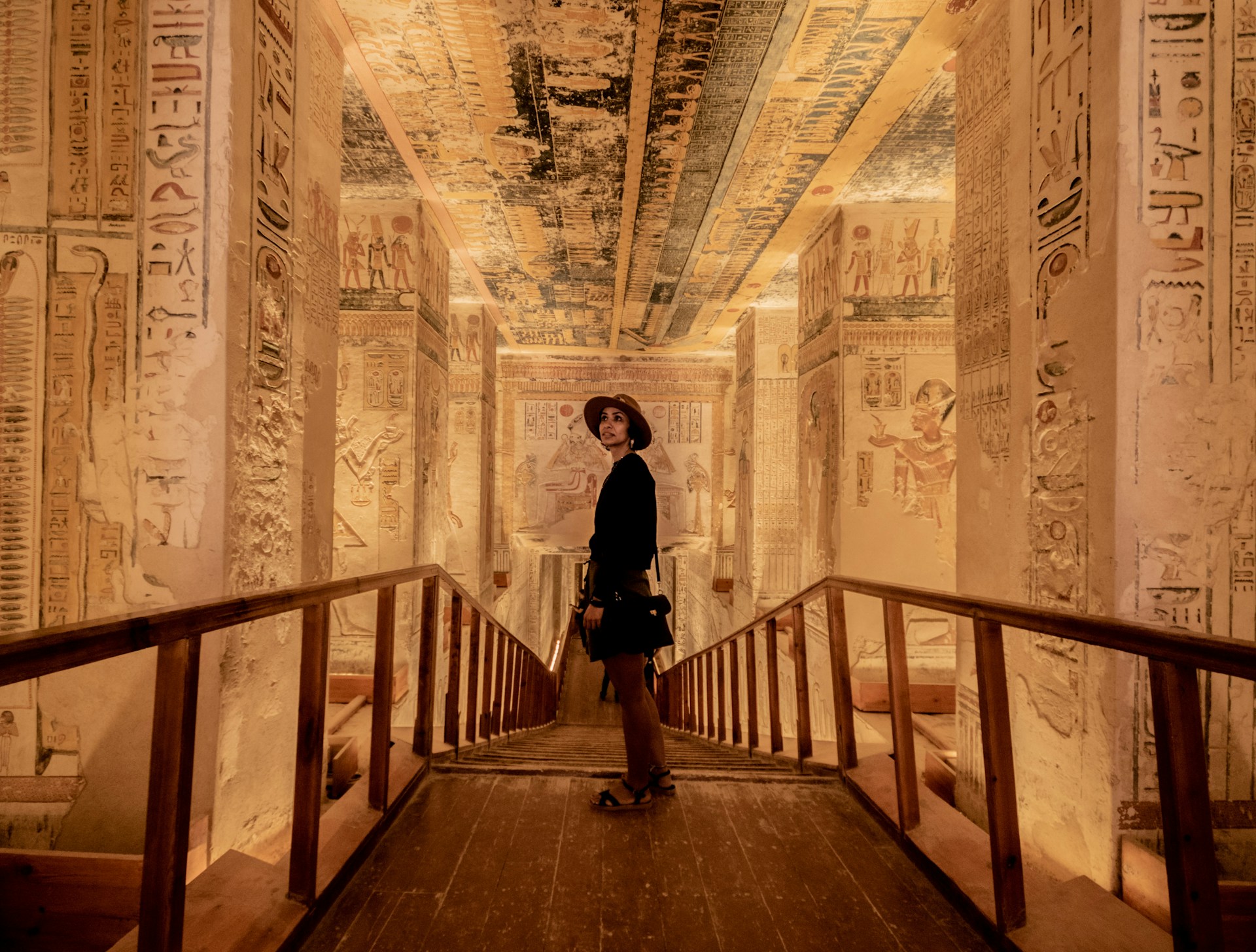
Several tombs contain undecorated rooms, sudden endings or scenes that were never completed.
The most common reason was probably the death of the pharaoh.
Once the king died, there was limited time to prepare the burial.
Workers focused on the most important sections.
The burial chamber and key religious areas came first.
Distant corridors and side rooms may have remained unfinished.
Poor rock, political trouble or changes in the building plan could also stop the work.
A tomb might be abandoned and restarted in another location.
The idea that some tombs were deliberately left unfinished because human life is never complete sounds interesting.
It is not strongly supported by evidence.
For most unfinished areas, limited time, the death of the ruler and building problems are more likely explanations.
What Do the Wall Paintings Show?
The scenes rarely show ordinary daily life.
You do not see royal breakfasts, palace meetings or quiet walks beside the Nile.
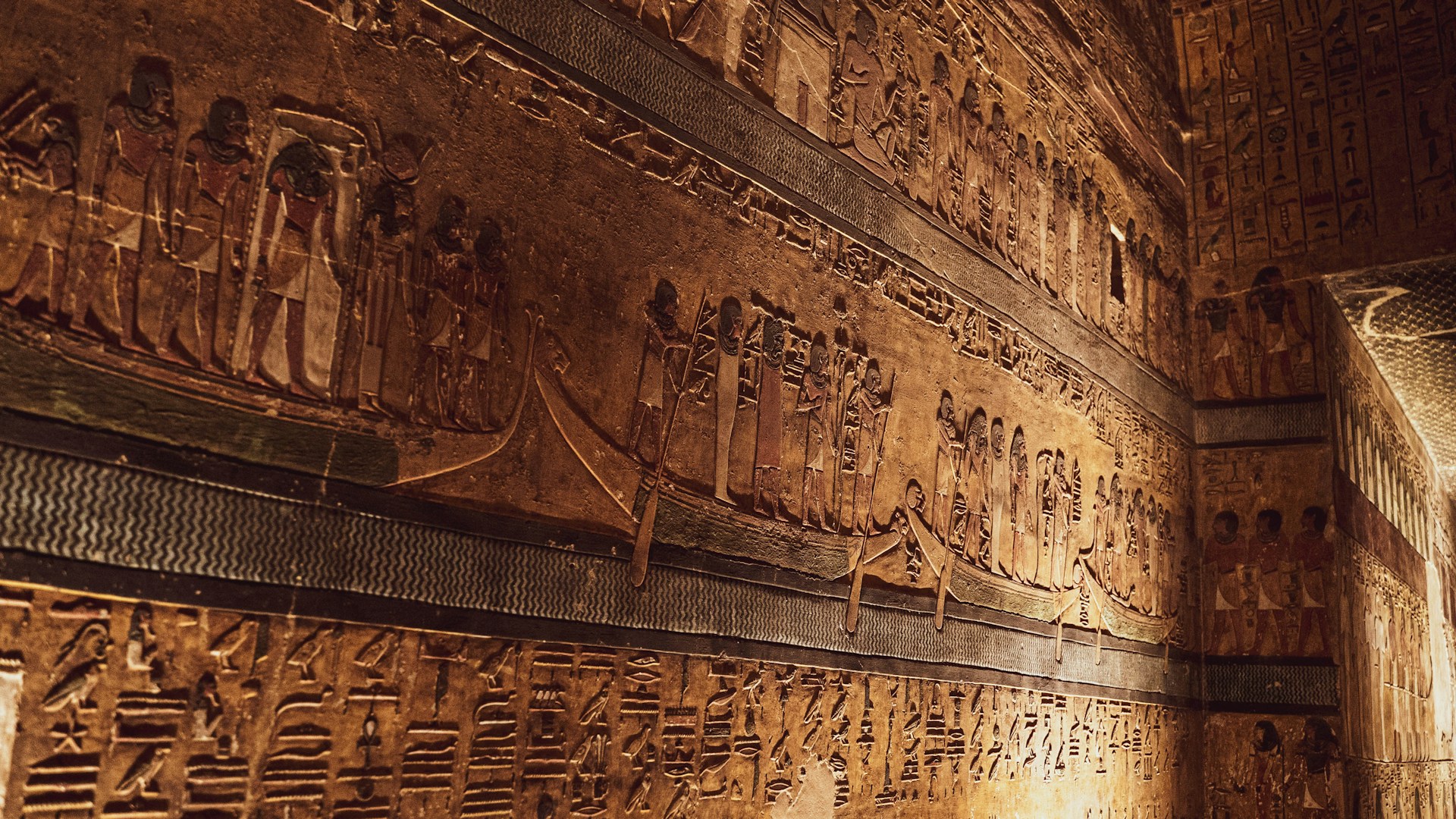
Instead, the walls show:
sun gods
protective goddesses
snakes
demons
ram-headed beings
sacred boats
stars
gates
mummies
and long hieroglyphic texts
Many images look unfamiliar to modern visitors.
Within ancient Egyptian religion, they followed an organised system.
Some figures protected the king.
Others represented dangers.
Some showed the powers needed for rebirth.
The images were not decoration without meaning.
Every figure, colour and direction could form part of a larger religious story.
Why Have the Colours Survived So Well?
The tombs remained dark for thousands of years.
Many were covered by debris or rarely entered.
The paintings were protected from rain and direct sunlight.
They are still fragile.
Modern visitors bring warmth, moisture, dust and carbon dioxide into the enclosed spaces.
Touching the walls can damage pigment and plaster.
This is why tombs sometimes close for conservation or open only for limited periods.
A tomb that is closed during your trip has not been shut to ruin your holiday plans personally.
The rest may be needed so the paintings survive for future visitors.
How to See the Tombs Without Rushing
Travellers who want to understand the religious scenes need more than a quick glance inside three chambers.
A private guide normally explains the main texts and figures outside the entrance. Long group talks may not be allowed inside the narrow tombs.
With two days in Luxor, you can enter the valley early, choose tombs more carefully and include other West Bank sites without rushing.
Private 2-Day Luxor Tour with a German-speaking Egyptologist, 4★ hotel, and modern vehicles. No shopping stops. Free consultation & 24/7 support.
From
A two-day tour suits travellers who want to combine the Valley of the Kings with Karnak, other Luxor attractions and a hot-air balloon flight.
The tombs were designed as paths to eternity.
One or two hours is enough only when you choose very carefully.
The more you understand the images, the less they look like a random collection of mysterious figures.
They become a complete story of darkness, danger, protection and rebirth.
The Most Important Tombs in the Valley of the Kings: Which Ones Are Worth Visiting?
No two tombs in the Valley of the Kings in Luxor are the same.
Some have wide corridors with a gentle slope. Others contain steep stairs, narrow passages and deep burial chambers. Some stand out because of their bright colours, while others are more interesting for their design or the history of the ruler.
Do not choose only by the most famous name.
Ask:
Which tombs are open?
Which are included with the standard ticket?
Can you manage stairs and long ramps?
Do you want the best wall paintings?
Are you more interested in history or architecture?
Is an extra ticket worth paying for?
The valley contains more than 60 known tombs, but only some are open at the same time.
Openings change so conservation work can take place and the interiors are not exposed to too many visitors.
You may not be able to make a final choice months in advance.
Check the open tomb list at the entrance and choose from what is available that day.
What Does the KV Number Mean?
The letters KV mean “Kings’ Valley”.
Every recorded tomb has a number.
For example:
KV2: Ramesses IV
KV6: Ramesses IX
KV9: Ramesses V and Ramesses VI
KV11: Ramesses III
KV16: Ramesses I
KV17: Seti I
KV47: Siptah
KV62: Tutankhamun
The number does not show when the king ruled.
It follows the modern recording system.
A higher number does not mean the tomb is newer, larger or more important.
Tutankhamun has the number KV62 even though he lived before several rulers whose tombs have much lower numbers.
The number is an archaeological label.
It is not a royal league table.
How Does the Standard Ticket Work?
The standard entry ticket normally allows you to enter three open standard tombs.
Several famous tombs require separate tickets.
After each standard tomb, your ticket is checked or recorded.
After three entries, you cannot simply enter a fourth standard tomb.
Choose your combination before entering the first one.
A useful selection may include:
one easier tomb
one longer tomb with many wall scenes
and one smaller tomb with strong colours
This gives you a better range of styles.
Tomb of Ramesses IX – KV6
KV6 is often a good first tomb.
The main corridor slopes down gradually. Many visitors find it easier than tombs with long, steep stairways.
Its walls contain religious figures and texts linked with the king’s journey through the underworld. Several areas remain colourful, and the straight layout is easy to follow.
KV6 may suit:
first-time visitors
guests who want fewer steep stairs
families with older children
and travellers looking for a clear tomb design
Easier access does not mean fully accessible.
The corridor still slopes, the interior can become warm and there is limited room for passing.
When open, it is a good place to begin.
Tomb of Ramesses III – KV11
The tomb of Ramesses III is one of the longer tombs in the valley.
Its corridors and side chambers contain many religious scenes, gods and hieroglyphic texts. The size makes the visit feel like a journey deep inside the mountain.
KV11 suits visitors who:
want to see a larger tomb
enjoy a wide range of wall paintings
find long corridors interesting
and have enough time for a slower visit
Allow more time than you would for a small tomb.
When the valley is busy, movement inside can be slow because the corridors do not allow easy passing.
KV11 works well as the largest tomb in your standard-ticket selection.
Tomb of Ramesses IV – KV2
KV2 lies close to the central visitor area and has a clear, straight design.
It is popular for its colourful ceilings, hieroglyphs and easy-to-read religious scenes.
The route includes steps followed by a fairly simple corridor towards the burial chamber.
It suits visitors who:
like clear architecture
want strong colours
prefer a tomb that is not extremely long
and want a good introduction to royal tomb decoration
KV2 pairs well with a longer tomb.
It can become crowded later in the morning, so an early start helps.
Tomb of Ramesses I – KV16
Ramesses I ruled for only a short time.
His tomb is smaller than the tombs of many later Ramesside kings. Despite its size, it contains bright and impressive scenes.
The route includes steep stairs.
KV16 is less suitable for visitors with:
knee problems
limited mobility
difficulty with steep steps
or discomfort in narrow descents
Travellers who manage the stairs will find a compact tomb with strong colour.
It proves that size is not everything.
A small chamber can create a powerful impression without needing a long corridor.
Tomb of Siptah – KV47
Siptah is not a name every traveller knows before visiting Luxor.
That can make his tomb an interesting choice.
When open, it may receive fewer visitors than the most famous tombs. You may have more time to look at the corridors and paintings without a large group standing behind you.
KV47 may suit you when you:
want a less famous tomb
prefer quieter places
want more than the best-known royal names
or enjoy comparing different tomb plans
A less famous king does not automatically mean a less interesting tomb.
Modern fame often depends on discoveries, museums and media attention rather than the quality of the burial place.
Tutankhamun is the clearest example.
Tomb of Ramesses VI – KV9
KV9 is one of the most beautiful tombs in the valley.
It was first started for Ramesses V and later enlarged for Ramesses VI.
A straight series of sloping corridors leads to the burial chamber.
Its strongest features include:
richly painted corridors
astronomical scenes
decorated ceilings
long religious texts
and a large burial chamber
The walls contain scenes from several underworld books, including the Book of Gates, the Book of Caverns, the Amduat and the Book of the Earth.
KV9 normally requires an extra ticket.
The extra cost may be worth it when you:
want to choose one special tomb
love colour and ceiling paintings
are interested in ancient Egyptian religion
or want a fully decorated royal tomb
The route is long but mostly straight.
The slope still makes it more tiring than walking on flat ground.
During busy hours, the burial chamber can feel crowded. The famous ceiling is difficult to study calmly when several people want to stand in exactly the same place.
Tomb of Seti I – KV17
Seti I’s tomb is considered one of the finest achievements of royal tomb building.
It is one of the longest, deepest and most carefully decorated tombs in the valley. Its reliefs are exceptionally detailed, and many walls are fully covered with religious scenes.
The visit takes more time and physical effort.
You walk:
down long sloping corridors
through several rooms
deep into the rock
and back up the same route
KV17 is best for:
travellers with a strong interest in Egyptology
visitors who want fine relief work
people with enough time
and guests who can manage longer slopes and stairs
The tomb normally requires a separate ticket.
The price is much higher than most other special tombs.
KV17 is therefore best visited when you have planned proper time for it.
It is not ideal for the sentence:
“We will have a quick look before the bus leaves.”
Tomb of Tutankhamun – KV62
KV62 is the most famous tomb in the valley.
Howard Carter discovered it in 1922 with much of its burial equipment still present. About 5,000 objects were found inside.
The tomb itself is small.
Only the burial chamber has extensive decoration. Compared with the long, fully painted tombs of Ramesses VI or Seti I, KV62 is simple in design.
Inside, visitors can see the king’s mummy and stone sarcophagus.
The famous objects found in the tomb are no longer all kept there. They were removed, conserved and placed in museum collections.
A separate ticket is required.
Tutankhamun is worth visiting when you:
care about the discovery story
want to see the king’s mummy
are interested in Howard Carter
or want to stand inside the world’s most famous royal tomb
For rich wall paintings, Ramesses VI usually offers more.
For archaeological importance, Tutankhamun has a special place.
You are paying less for the size of the tomb.
You are paying for the location of one of archaeology’s greatest discoveries.
Which Special Tomb Should You Choose?
You do not need to visit every special tomb.
One is enough for many first-time visitors.
Choose Ramesses VI when you:
want the best colours
like astronomical ceilings
prefer a long, fully decorated tomb
want a strong balance between cost, time and experience
Choose Tutankhamun when you:
want to see the famous discovery site
care about Howard Carter’s story
want to see the mummy
value historical importance more than size
Choose Seti I when you:
have a serious interest in ancient Egyptian art
want detailed reliefs
have enough time
can manage a longer and steeper route
are comfortable with the higher price
For a first visit, Ramesses VI is often the most balanced choice.
Tutankhamun has the strongest discovery story.
Seti I is the deepest experience for travellers focused on art and religion.
Three Good Standard-Ticket Combinations
The exact list depends on which tombs are open.
These combinations are examples rather than guarantees.
Combination for First-Time Visitors
Ramesses IX
Ramesses IV
Ramesses III
This selection includes an easier first tomb, a compact colourful tomb and a larger complex.
Combination for Strong Colours
Ramesses IV
Ramesses I
Ramesses IX
Choose Ramesses I only when steep stairs are not a problem.
Combination with a Less Famous Tomb
Siptah
Ramesses IX
one other open standard tomb
This may be a calmer choice on busy days.
Ask your guide or the staff which tombs currently have shorter queues.
The most famous option is not always the best option that morning.
How Many Tombs Should You Visit?
Three standard tombs and one special tomb are enough for most visitors.
More may sound attractive at first.
After the fourth or fifth tomb, the colours and corridors may begin to blend together. The heat, stairs and narrow spaces also become more tiring.
A better plan is:
three carefully chosen standard tombs
one special tomb
short breaks
and enough time to look properly
You do not need to enter every open tomb to understand the valley.
One slow look at a painted ceiling may show you more than two rushed corridors.
When Is More Than One Day in Luxor Worthwhile?
A day trip is enough for the Valley of the Kings and several important West Bank sites.
Travellers with a strong interest in history benefit from more time.
With several days, you can combine the valley with Dendera, Abydos, Karnak, Deir el-Medina and other tombs.
A three-day private trip suits travellers who want more than the best-known highlights. It also includes time for Dendera and Abydos, where the reliefs and colours provide an interesting comparison with the royal tombs of Luxor.
Your best tomb selection depends on more than the fame of the pharaoh.
It depends on your interests, mobility, available time and the tombs that are open.
Do not automatically choose the three entrances with the longest queues.
The people waiting there may not know more than you.
They may simply have read the same guidebook.
Best Time to Visit the Valley of the Kings
The most comfortable time to visit the Valley of the Kings in Luxor is usually between October and April.
Luxor remains sunny and dry during winter. Early mornings in December, January and February can feel surprisingly cool, so a light jacket may be useful.
From May to September, temperatures rise sharply. June, July and August can bring daytime highs above 40°C.
A summer visit is still possible when you:
arrive at opening time
avoid long periods in the midday sun
carry enough water
wear a hat
and visit fewer tombs at a slower pace
Dry heat may feel easier than humid weather.
It is still heat.
A tomb corridor is not an air-conditioned shopping centre simply because it lies underground.
Which Months Are Best?
For many travellers, these periods work well:
October and November
December to February
March and early April
October and November bring warm days and cooler mornings.
December to February is comfortable for longer sightseeing days, though visitor numbers may be higher.
March and April become warmer, so starting early matters.
What Is the Best Time of Day?
The best time is usually just after opening.
Between 6 and 8 am:
temperatures are lower
many coach groups have not arrived
the paths are quieter
queues are shorter
Later in the morning, more day trips and cruise groups arrive.
Famous tombs such as Ramesses VI and Tutankhamun may become crowded.
An early start also leaves more time for Hatshepsut Temple, the Colossi of Memnon, Medinet Habu or other West Bank sites.
Valley of the Kings Opening Hours in 2026
The valley is currently listed as open every day from 6 am to 5 pm.
Opening hours may change because of:
public holidays
Ramadan
conservation work
security arrangements
extreme weather
or operational decisions
Check again shortly before your visit.
This matters especially when you:
are travelling without a guide
book online
have a tight itinerary
or are travelling from Hurghada
The closing time does not mean every tomb will accept new visitors until the final minute.
Allow time for:
ticket checks
travel from the visitor centre
tomb selection
possible queues
and the return walk
Valley of the Kings Tickets and Entry Fees
The standard ticket allows access to three open standard tombs.
Prices and available tickets can change, so check the official ticket platform before your visit.
Student visitors should carry a recognised student card.
Children under the stated age limit may qualify for free entry under current official rules.
What Does the Standard Ticket Include?
You can normally choose three open standard tombs.
The open list changes.
Do not treat a particular tomb as guaranteed unless its opening has been confirmed close to your visit.
The standard ticket does not include every tomb.
Several famous tombs need separate tickets.
Which Tombs Need Extra Tickets?
Common special-ticket tombs include:
Tutankhamun, KV62
Ramesses V and Ramesses VI, KV9
Seti I, KV17
The tomb of Ay in the Western Valley may also be sold separately.
Availability can change.
Are Special Tickets Worth It?
For many first-time visitors, Ramesses VI is the strongest choice.
It offers:
well-preserved colour
long decorated corridors
astronomical ceilings
and an impressive burial chamber
Tutankhamun is more valuable for its historical importance and discovery story.
Seti I suits travellers with a deep interest in ancient Egyptian art, relief and tomb design.
Its higher price is less worthwhile when you have only a few minutes.
Should You Buy Tickets Online?
Official online booking can be useful when you:
already know your visit date
want to reduce time at the ticket office
are planning several Luxor sites
or are arranging a private visit
Check:
date
visitor category
adult or student ticket
special tombs
payment confirmation
Save the QR code offline.
A screenshot helps when mobile data decides to enjoy some archaeological silence at the entrance.
How Much Time Do You Need?
Allow around two to three hours for three standard tombs.
With a special tomb, longer pauses or a serious interest in the paintings, three to four hours is better.
The total time depends on:
chosen tombs
queues
walking speed
heat
stairs
a Western Valley visit
and extra tickets
Travellers who visit three nearby tombs quickly may finish sooner.
Visitors entering Ramesses VI, Seti I or several long tombs need more time.
Do not schedule every minute.
Some of the best moments happen when you are not already thinking about the next exit.
Photography and Filming Inside the Tombs
Photography and video rules can change.
Ask at the ticket office and follow the signs at each tomb.
Private photography may be allowed in many areas, but separate rules can apply to professional equipment, lighting, commercial work and specific tomb interiors.
Do not rely on a rule from an earlier Egypt trip.
Check:
whether photos are allowed
whether video is allowed
whether flash is banned
whether cameras and phones follow the same rule
whether special tombs have different conditions
How to Take Photos Respectfully
When photography is allowed:
do not use flash unless clearly permitted
do not block stairs or corridors
avoid long photo sessions in narrow spaces
let other visitors pass
follow the tomb guards’ instructions
A painted corridor is not a private photo studio.
One person holding a phone at arm’s length can block an entire passage.
Can You Touch the Walls?
No.
Do not touch:
wall paintings
reliefs
hieroglyphs
columns
sarcophagi
or painted doorways
Even a light touch transfers moisture, oil and dirt.
The surfaces may look fresh.
That does not make them strong.
Be Careful with Backpacks
Large backpacks can hit the walls when you turn inside a narrow tomb.
Carry your bag:
close to your body
in front of you
or leave it in the vehicle when possible
A small bag is easier.
Your full holiday equipment does not need to travel into the underworld.
Tomb Guards and Tipping
Guards work inside open tombs to:
check tickets
watch visitor movement
protect the site
and apply the rules
Some may point out small details or suggest a good photo angle.
A voluntary tip may be expected.
You do not have to pay simply because somebody showed you an image on the wall without being asked.
Do not pay for actions that break the rules, such as:
touching the walls
entering closed areas
taking forbidden photographs
or opening restricted sections
A “special view” is not worth damaging a 3,000-year-old monument.
Why Do Guides Usually Explain the Tombs Outside?
Guides often give their main explanation before visitors enter.
The corridors are usually:
narrow
warm
steep
and busy
A group standing still inside can block everyone else.
Long visits by large numbers of people also affect temperature, humidity and carbon dioxide levels.
A good guide explains outside:
the king’s history
the tomb plan
the main gods
the religious texts
the important ceiling scenes
and details to look for
You then enter and look at the paintings at your own pace.
Ask for a clear explanation rather than a very long one.
After twenty-five minutes standing in full sun, even the most interested visitor may care more about shade than the Book of Gates.
Practical Tips for Your Visit
Start Early
Arrive between 6 and 8 am when possible.
You will avoid some of the heat and later crowds.
Choose Before Entering the First Tomb
Check the open list and decide on your three tombs.
A good choice includes different layouts and levels of difficulty.
Begin with an Easier Tomb
Ramesses IX or Ramesses IV may be a comfortable start when open.
You can then judge how you react to:
heat
slopes
stairs
and narrow spaces
Do Not Always Save Your Favourite Tomb Until Last
When Ramesses VI or Tutankhamun is your priority, visit early.
Queues may be longer later, and your legs may be more tired.
Carry Enough Water
The valley has little natural shade.
Drink regularly.
Keep bottles closed inside sensitive tomb areas.
Wear Suitable Shoes
Good options include:
supportive sandals
lightweight walking shoes
or comfortable trainers
Loose flip-flops are less helpful on ramps and steps.
Protect Yourself from the Sun
Take:
a hat
sunglasses
sun cream
light clothing
and a thin scarf when useful
Take Breaks
Sit down between longer tombs.
Three entrances may look simple on a map.
After several hundred steps, the map will not accept personal responsibility.
Is the Valley of the Kings Suitable for Children?
The valley can be very exciting for children.
Painted chambers, mummies and hidden passages may hold their attention better than long temple talks.
It is especially suitable when the child:
can manage longer walks
is comfortable with stairs
does not have a strong fear of enclosed spaces
and is interested in history
For younger children:
choose fewer tombs
start early
take breaks
carry water and snacks
avoid the steepest tombs
Pushchairs are not suitable for many entrances.
A child carrier may be more practical for very young children, though the heat must be considered.
A child does not need to enter all three standard tombs.
Two enjoyable tombs are better than a third where everyone talks only about leaving.
Visiting with Limited Mobility
The valley and many tombs are not fully accessible.
Possible difficulties include:
uneven ground
slopes
steep stairs
narrow corridors
limited handrails
long walks in direct sun
Some tombs are easier than others.
Ask at the entrance:
which tombs have gentler access
which are open
whether the visitor train can help
and how far each entrance is
A private guide can adjust the selection.
Describe your mobility needs clearly.
Instead of only saying, “I cannot walk far”, explain:
how many minutes you can walk
whether stairs are possible
whether you use a stick, walker or wheelchair
whether regular breaks are needed
Is the Valley Suitable for Claustrophobia?
Some tombs have wide corridors and high ceilings.
Others feel narrow, steep or deep.
With mild claustrophobia, you can:
begin with a shorter tomb
avoid busy hours
stay near the entrance
leave at any time
Tell your guide before the visit.
You do not need to reach the burial chamber.
Stopping halfway is not a failure.
The pharaoh will not score your bravery at the exit.
How to Reach the Valley of the Kings
The valley lies on the Luxor West Bank.
From the East Bank, you can travel by:
private car
organised tour
taxi
or local ferry followed by a vehicle
When visiting independently, arrange the return journey in advance.
It may be possible to find transport at the entrance, but a fixed booking is easier to manage.
Travellers coming from Hurghada should expect a long road journey.
Private day trips usually combine the valley with Karnak, Hatshepsut Temple and the Colossi of Memnon.
Two or three days offer a calmer experience.
Which Sites Can You Combine with the Valley?
Hatshepsut Temple
The terraced temple at Deir el-Bahari lies close to the valley and is one of the West Bank’s main sites.
Its position beneath the cliffs and its links with Queen Hatshepsut make it a natural addition.
Colossi of Memnon
The two monumental seated statues work well as a short photo stop.
They stand along many routes between the valley and other West Bank sites.
Medinet Habu
The memorial temple of Ramesses III is known for large reliefs and surviving colour.
It is often calmer than Karnak.
Deir el-Medina
The workers’ village shows how the craftsmen who built the royal tombs lived.
The workers’ own tombs are smaller but contain bright daily-life scenes and religious images.
Valley of the Queens
Queens, princes and other royal family members were buried here.
The tomb of Nefertari is one of the most famous, but it may have separate tickets and special access rules.
Howard Carter House
Howard Carter used this house while working in the Theban Necropolis.
It became his base during the discovery of Tutankhamun’s tomb in 1922.
Karnak Temple
Karnak stands on the East Bank.
A full Luxor day often includes the Valley of the Kings in the morning and Karnak later.
During hot weather, a longer midday break between the West and East Banks is sensible.
Combining the Valley of the Kings with Aswan and Abu Simbel
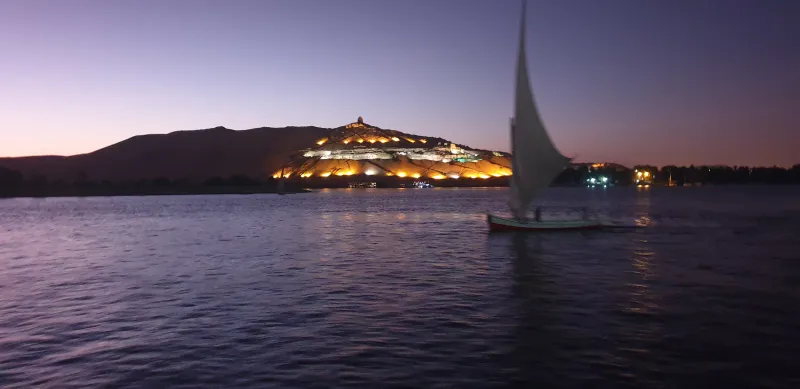
Travellers with several days can combine Luxor with Aswan and Abu Simbel.
A longer route allows time for:
more West Bank sightseeing
Karnak and Luxor Temple
travel through the Nile Valley
Edfu or Kom Ombo
Aswan
and Abu Simbel
3-day private tour to Luxor, Aswan & Abu Simbel. Small group, German-speaking Egyptologist, modern vehicles, and no shopping stops.
From
A three-day private route suits travellers who want to see more than one archaeological area. It is faster than a long Egypt tour, but it links several of Upper Egypt’s most important sites.
Combining the Valley of the Kings with a Nile Cruise
A Nile cruise between Luxor and Aswan offers a different pace.
Instead of making repeated long drives from the Red Sea, you travel gradually through the Nile Valley.
The Valley of the Kings can be visited before or after the cruise.
Depending on the route, later stops may include:
Edfu
Kom Ombo
Esna
and Aswan
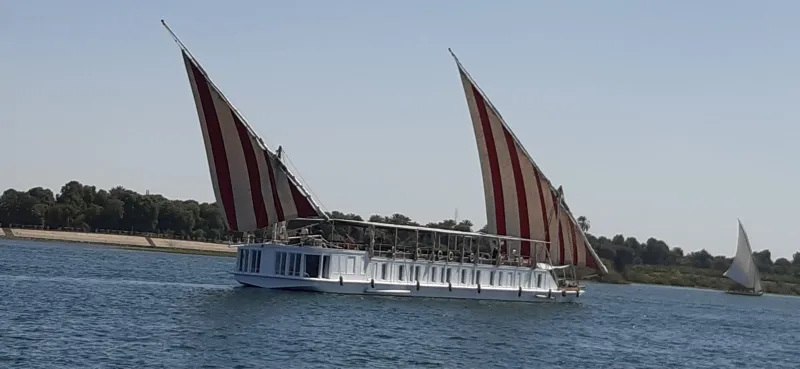
The perfect way to slow down away from mass tourism—gliding silently from Luxor to Aswan aboard a traditional luxury sailing vessel. Discover fascinating ancient temples, untouched Nile islands, and authentic encounters in local villages.
From
A Dahabiya suits travellers who prefer smaller boats, slower travel and more time beside the Nile. The Valley of the Kings becomes part of a longer Upper Egypt journey rather than a single day trip.
What Should You Take?
Pack:
ticket confirmation
passport copy or required travel document
student card
water
sun cream
hat
sunglasses
comfortable shoes
light clothing
small cash notes
mobile phone
power bank
and personal medication
Take a light jacket for early winter mornings.
Carry less in summer.
A heavy backpack does not become lighter after the third tomb.
It only becomes more personal.
Frequently Asked Questions About the Valley of the Kings
How Many Tombs Are in the Valley of the Kings?
More than 60 known tombs have been recorded, along with unfinished sites and shafts.
Not all are open at the same time.
How Many Tombs Can You Visit with the Standard Ticket?
You can normally enter three open standard tombs.
Special tombs need extra tickets.
Which Tomb Is the Most Beautiful?
Many visitors choose Ramesses VI because of its colour, astronomical ceiling and fully decorated corridors.
Seti I is often considered the artistic high point because of its detailed reliefs and size.
The best choice depends on your interests and budget.
Is Ramesses VI Worth the Extra Ticket?
For most first-time visitors, yes.
The tomb contains well-preserved reliefs, several religious texts and striking astronomical ceilings.
Is Tutankhamun Worth Visiting?
Yes, when you are interested in the discovery, the mummy and the historical importance of the site.
The tomb is smaller and less richly decorated than many other royal tombs.
Its importance comes mainly from the large amount of burial equipment found in 1922.
Is the Golden Mask Still Inside the Tomb?
No.
The famous objects are no longer kept inside the tomb.
Visitors see the original burial location, the sarcophagus and Tutankhamun’s mummy.
Is Seti I Worth the Price?
For travellers with a strong interest in ancient Egyptian art, it can be.
The tomb is one of the longest, deepest and most carefully decorated in the valley.
The high ticket cost and more demanding route should be considered.
What Time Does the Valley Open?
The valley is currently listed as opening at 6 am and closing at 5 pm.
Check the times before your trip.
What Time Should You Arrive?
Arrive at opening time or by around 7 am.
The air is cooler and the valley is often quieter.
How Long Does a Visit Take?
Allow two to three hours for three standard tombs.
Three to four hours is better with a special tomb and longer explanations.
Can You Take Photos Inside?
Rules can change and may differ by tomb.
Check the signs and ask at the ticket office.
Do not use flash unless clearly allowed.
Do You Need a Guide?
A guide is not required, but can help you understand the kings, tomb plans and religious texts.
Long explanations normally take place outside.
Can You Visit Without a Tour?
Yes.
You can buy your own tickets and reach the West Bank by taxi or private vehicle.
A tour is easier when you want to combine several sites or avoid arranging transport yourself.
Is the Valley Wheelchair Accessible?
Only partly.
Slopes, steps, narrow corridors and uneven paths limit access.
Ask which open tombs are easiest.
Is It Cool Inside the Tombs?
Not always.
Some feel cooler than the sunlight outside.
Crowds, limited airflow and narrow corridors can still make them warm and stuffy.
Can You Bring Food?
Snacks are useful for breaks outside.
Do not eat inside the tombs and do not leave rubbish.
Are There Toilets?
Toilets are normally available in the visitor area.
Use them before beginning your tomb visits.
“I will go after the next tomb” can become an ambitious plan when the corridor is long.
Final Thoughts: Why the Valley of the Kings Is Worth Visiting
The Valley of the Kings in Luxor is far more than a group of ancient tombs.
It shows how the New Kingdom pharaohs understood death, rebirth and eternal life.
Every corridor had a purpose.
Every god, snake, star-covered ceiling and hieroglyphic line helped guide the dead king through the underworld.
The valley also tells very human stories:
fear of tomb robbers
political power
huge building projects
early death
unfinished work
and the wish not to be forgotten
For a good visit:
start early
check which tombs are open
choose three different standard tombs
add no more than one or two special tombs
carry enough water
and avoid rushing through every possible entrance
Ramesses VI is a strong choice for colour and ceiling scenes.
Tutankhamun offers the most famous discovery story.
Seti I shows royal tomb art at its most detailed.
The right choice depends on your time, mobility, budget and interests.
From outside, the valley looks dry, silent and almost empty.
Its real story begins behind the openings in the rock.
Inside, you do not find a dark and colourless world.
You find stars, gods, solar boats and kings prepared for rebirth more than three thousand years ago.