
Full Description
The private Luxor Aswan Abu Simbel from Hurghada tour combines some of the most important archaeological sites in Upper Egypt in one 3-day trip. You start in Luxor with the Valley of the Kings, Hatshepsut Temple and Karnak, continue south to Aswan on Day 2, then visit the rock temples of Abu Simbel beside Lake Nasser on Day 3.
You travel only with your own group in a private air-conditioned vehicle. A German- or English-speaking Egyptologist accompanies the cultural programme and explains the history behind the temples, tombs and monuments.
The standard price includes one night in a 4-star hotel in Luxor, one night in a 4-star hotel in Aswan, two breakfasts and three lunches.
Participants | Vehicle | Price per person |
|---|---|---|
1–2 people | Private limousine / comfortable car | €680 |
3–5 people | Private comfortable minibus | €580 |
6–8 people | Private comfortable minibus | €450 |
Single room supplement: €40 per night
Children aged 6 to 11 are currently listed at 50% of the adult price.
Children aged 0 to 5 are shown as free in the current booking system. Because this is a multi-day tour with two hotel nights and long driving sections, the final child price and room arrangement should still be confirmed before booking.
Luxor Aswan Abu Simbel from Hurghada at a Glance
The current standard programme includes:
Private 3-day tour
Direct hotel pickup and return transfer
Private air-conditioned car or minibus
German- or English-speaking Egyptologist
Valley of the Kings
Three regularly open royal tombs
Hatshepsut Temple
Colossi of Memnon
Karnak Temple
One night in a 4-star hotel in Luxor
Philae Temple
Motorboat to Philae Temple
Aswan High Dam
Unfinished Obelisk
Felucca sailing on the Nile
One night in a 4-star hotel in Aswan
Great Temple of Ramesses II at Abu Simbel
Temple of Queen Nefertari
Two breakfasts
Three lunches
Soft drinks in the vehicle
Entrance tickets for the confirmed standard programme
No planned shopping stops
If you would rather spend more time in Luxor without continuing to Aswan, you can compare the 2-day Luxor option here:

Why Three Days Work Well for Luxor, Aswan and Abu Simbel
Luxor, Aswan and Abu Simbel are not close to each other.
Several long road sections connect the cities and temples.
Across three days, you travel:
Hurghada to Luxor
Luxor to Aswan
Aswan to Abu Simbel
Abu Simbel back to Aswan
Aswan back to the Red Sea
This is not a slow hotel-based break.
It suits travellers who want to see a large part of Upper Egypt in a short time and are comfortable with early starts and longer drives.
Day 1 – Hurghada to Luxor
Day 1 begins early.
The current tour page gives around 05:00 as the starting time.
You are collected directly from your hotel and travel privately to Luxor.
Around 05:00 – Hotel Pickup
Your driver collects you in an air-conditioned vehicle.
The exact pickup time depends on your hotel and holiday resort.
The live page lists pickup from:
Hurghada
El Gouna
Sahl Hasheesh
Makadi Bay
Soma Bay
Safaga
Marsa Alam
El Quseir
This page does not publish a fixed supplement table for the more distant resorts.
If you are staying outside Hurghada, confirm whether a transfer supplement applies and what your pickup time will be.
Drive to Luxor
The road takes you from the Red Sea across the Eastern Desert towards the Nile Valley.
The live page gives roughly 280 kilometres from Hurghada to Luxor.
The actual driving time depends on your starting point, breaks and road conditions.
After arrival, the cultural programme begins on Luxor’s West Bank.
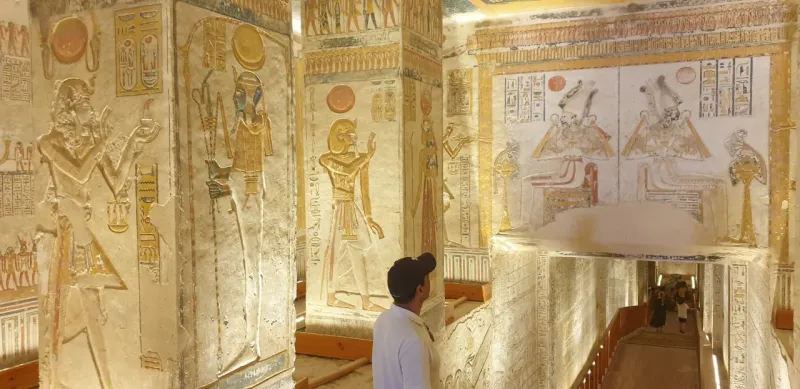
Valley of the Kings
The first major stop is the Valley of the Kings.
Many rulers of the New Kingdom had their tombs cut into the rock here.
The standard programme includes entry to three regularly open royal tombs.
The exact tombs available can change according to the official opening schedule.
Which Tombs Are Included?
The standard ticket covers three regularly open tombs.
Special tombs require separate tickets.
The live page specifically mentions:
Tutankhamun
Seti I
as examples of tombs not included in the standard price.
If there is a special tomb you want to visit, mention it when making your enquiry.
More practical Valley of the Kings advice:

How Demanding Is the Valley of the Kings?
The ground is uneven in places.
Depending on the tomb, you may walk through:
Ramps
Steps
Sloping corridors
Narrower sections
In summer, the outdoor areas can become very hot.
If you have limited mobility, knee problems or difficulty with longer walking distances, discuss the visit before booking.
Temple of Queen Hatshepsut
You then visit the terraced Temple of Queen Hatshepsut at Deir el-Bahari.
The temple stands directly below the high cliffs of the West Bank.
Your Egyptologist explains Hatshepsut’s history and important scenes within the temple.
These include reliefs connected with her famous expedition to the Land of Punt.
Colossi of Memnon
A shorter stop is made at the Colossi of Memnon.
The two large seated statues originally stood at the mortuary temple of Amenhotep III.
Today, they stand in the open West Bank area.
This stop is usually shorter than the Valley of the Kings or Hatshepsut Temple visits.
Lunch in Luxor
Lunch is planned after the West Bank programme.
This is the first of three included lunches.
Drinks in hotels and restaurants are listed as not included on the current page.
If you are vegetarian or have food intolerances, mention this when making your enquiry.
Karnak Temple
After lunch, you cross to the East Bank and visit Karnak.
The temple complex developed over many centuries.
One of its best-known sections is the Great Hypostyle Hall with 134 columns.
Your Egyptologist explains areas such as:
Pylons
Column halls
Obelisks
Courtyards
Sacred Lake
Development of the temple complex
Why an Egyptologist Helps on This Tour
Across three days, you see monuments from different periods and locations.
A qualified Egyptologist helps connect rulers, temples and historical events.
More information about the role of an Egyptologist:
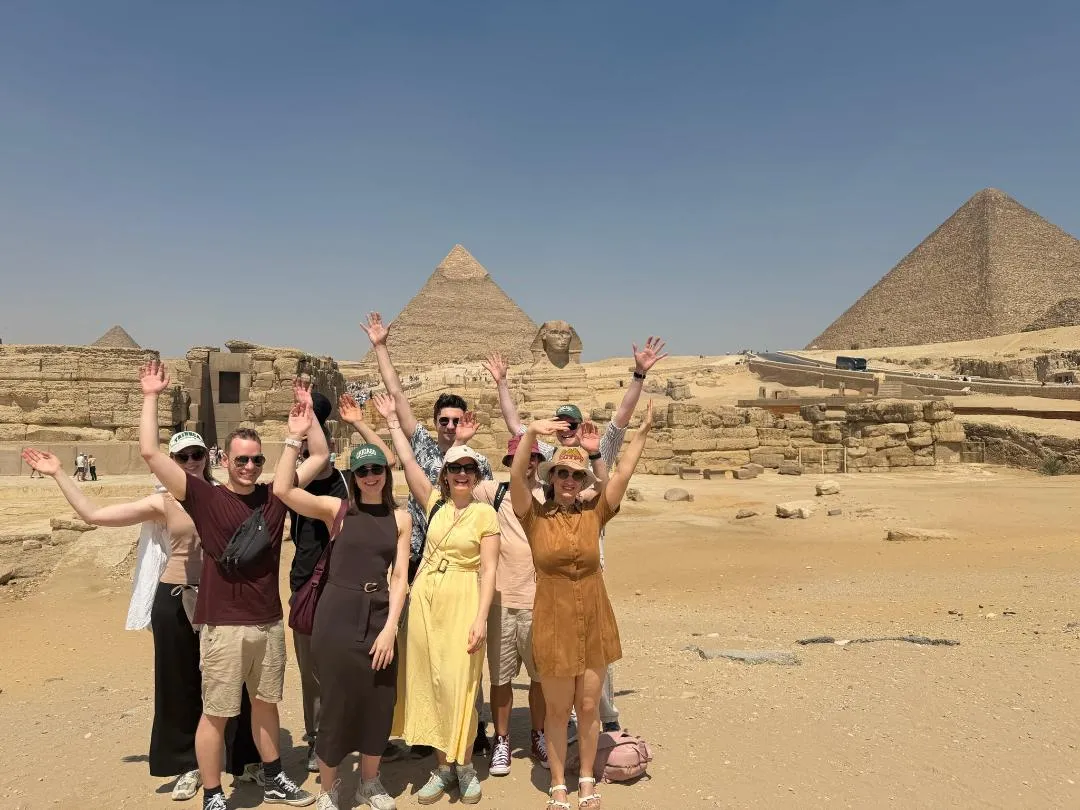
Overnight Stay in Luxor
After the sightseeing programme, you are taken to your hotel.
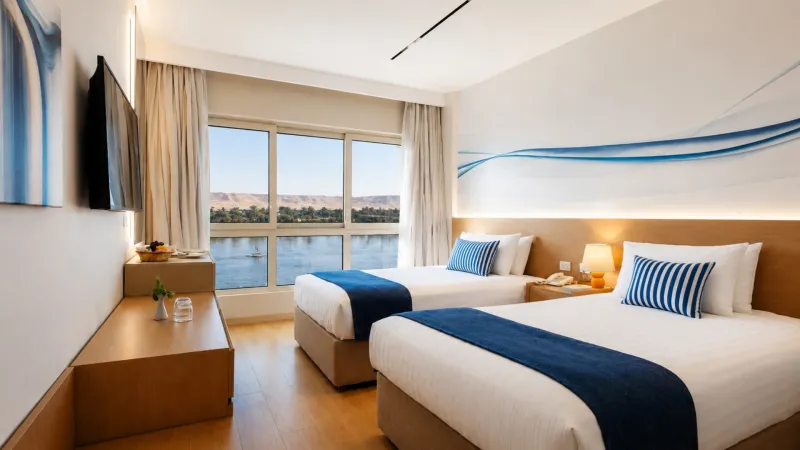
The first night is in a 4-star hotel in Luxor according to the current page.
The exact hotel depends on availability.
If something is important to you, mention it during your enquiry.
For example:
Double bed
Twin beds
Family room
Lift
Quieter room
Single Room in Luxor
The live page lists a supplement of €40 per night for a single room.
If you want a single room for both nights, confirm the total supplement before booking.
Day 2 – Luxor to Aswan
After breakfast, you check out and continue south.
Day 2 focuses on Aswan.
The standard programme includes Philae, the High Dam, the Unfinished Obelisk and a felucca sailing on the Nile.
Breakfast at the Hotel
Breakfast is included with the hotel stay.
You then leave Luxor and travel towards Aswan.
Because you stay in Aswan that night, take your luggage with you.
For two nights, a small travel bag is enough for many guests.
Drive to Aswan
The road between Luxor and Aswan takes several hours.
This driving time is a fixed part of the tour.
Wear comfortable clothing and keep personal items such as medication, phone and water within easy reach.
After arrival, the sightseeing programme begins.
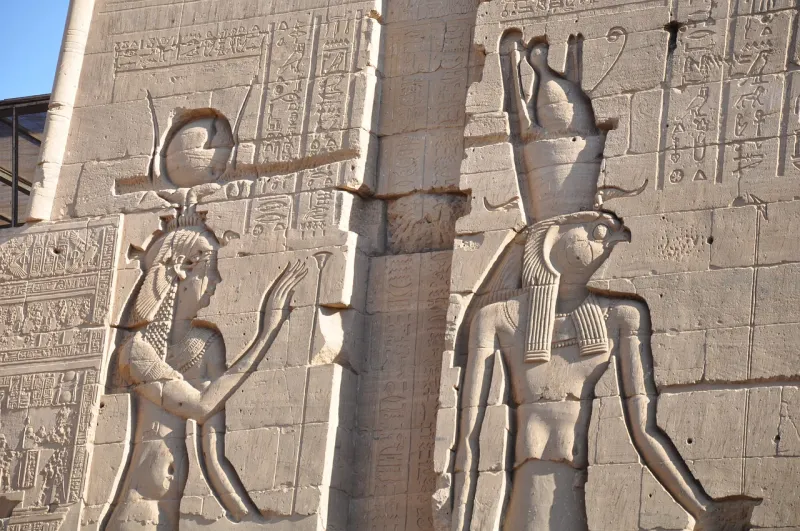
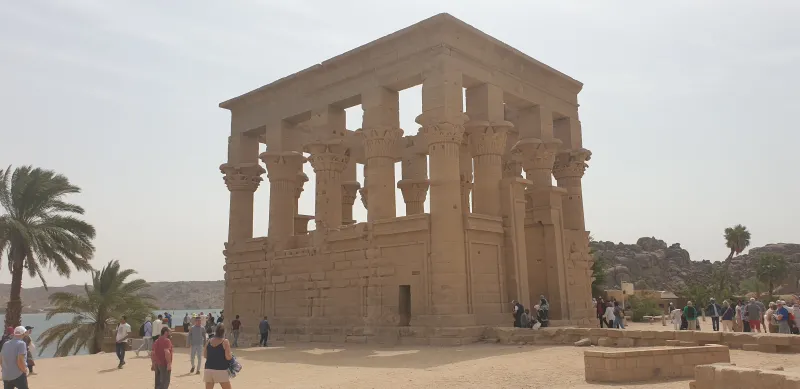
Philae Temple
One of the main stops in Aswan is Philae Temple.
The complex now stands on Agilkia Island.
You reach it by motorboat.
The temple is mainly dedicated to the goddess Isis.
Why Philae Was Moved
The temple complex originally stood at another location.
Changes to the Nile and the construction of major dam projects placed it at risk from water.
Philae was therefore moved to higher ground as part of an international preservation project.
The visit now combines ancient history with modern conservation work.
Motorboat to Philae Temple
The boat transfer is part of the visit.
You board at the jetty and travel across to the island.
If you have limited mobility, check in advance how boarding and getting off the boat can be managed.
Water level and the exact jetty can affect how easy this is.
Aswan High Dam
You then visit the Aswan High Dam.
The dam transformed the region and led to the creation of Lake Nasser.
Your guide explains its importance for:
Water control
Electricity production
Agriculture
Development of Lake Nasser
Preservation of threatened monuments
The effects of the dam are also important to the stories of Philae and Abu Simbel.
Unfinished Obelisk
At the ancient granite quarry in Aswan, you visit the Unfinished Obelisk.
It was cut directly from the rock but was never completed.
Today, it provides a clear look at how large stone monuments were prepared.
The quarry surface can be uneven.
Comfortable closed shoes are useful.
Lunch in Aswan
The second included lunch is served in Aswan.
Drinks at the restaurant are paid separately.
After lunch, the programme continues.
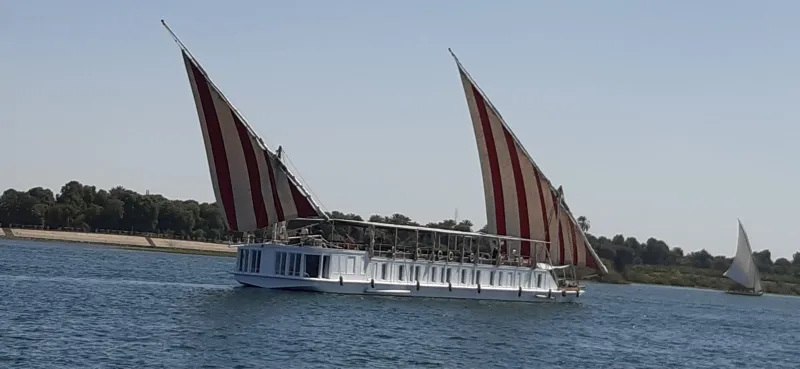
Felucca Sailing on the Nile
A traditional felucca sailing is planned for the afternoon.
A felucca is a sailing boat used on the Nile.
This provides a quieter part of the day after the road transfer and sightseeing.
Because feluccas depend on the wind, the exact route can vary.
What Happens if There Is Little Wind?
A felucca uses sails.
Wind direction and strength therefore affect the route.
One exact course should not be promised for every date.
The activity remains a Nile sailing, but route and duration may be adjusted according to conditions.
Evening in Aswan
The live page also mentions time for a walk through Aswan’s bazaar.
This is less important than the main historical sites and can be adjusted according to the time and energy of the group.
You do not need to buy anything.
Overnight Stay in a 4-Star Hotel in Aswan
The second night is in a 4-star hotel in Aswan.
Breakfast the next morning is included.
The exact hotel depends on availability.
Because Day 3 starts early, getting a good night’s rest is useful.
Day 3 – Aswan to Abu Simbel and Back to the Red Sea
Day 3 starts early.
You travel from Aswan to Abu Simbel.
The live page gives around three hours each way between Aswan and Abu Simbel.
That makes Day 3 the most driving-heavy day of the tour.
Early Departure to Abu Simbel
The exact departure time depends on the daily schedule.
An early start is needed so that you have enough time at the temples and can later return through Aswan towards the Red Sea.
During cooler months, a light jacket or extra layer can be useful during the early drive.
Why Is Abu Simbel So Far South?
Abu Simbel lies south of Aswan beside Lake Nasser and fairly close to Egypt’s southern border.
The road distance from Aswan is around 300 kilometres.
This is one reason the visit requires such an early start.
Great Temple of Ramesses II
The main temple is dedicated to Ramesses II.
The façade is dominated by four enormous seated statues of the king.
Inside are halls and chambers leading deeper into the temple.
Your Egyptologist explains:
Ramesses II
Purpose of the temple
Reliefs
Religious meaning
Political message of the monument
The Abu Simbel Sun Alignment
The Great Temple is famous for its special orientation.
On particular dates, sunlight reaches far into the temple interior.
If you plan to visit around the well-known February or October sun event, expect much larger crowds.
Temple of Queen Nefertari
Beside the Great Temple stands the smaller temple dedicated to Queen Nefertari and the goddess Hathor.
Its façade is especially notable.
Nefertari is shown at nearly the same scale as Ramesses II, which is unusual for royal imagery of that period.
How Much Time Do You Have at Abu Simbel?
The exact visit length depends on the daily schedule, visitor numbers and the long return drive.
Both main temples are included.
If photography or a particular section matters to you, tell your guide.
The Relocation of Abu Simbel
The temples originally stood lower.
The construction of the Aswan High Dam and the creation of Lake Nasser threatened the area with flooding.
The temples were therefore cut into large sections and rebuilt on higher ground.
This relocation is one of the best-known monument preservation projects of the 20th century.
Why the Relocation Matters
Moving Abu Simbel showed how much the High Dam changed the region.
On this tour, you see two major examples of monuments moved because of changes to the Nile:
Philae
Abu Simbel
That gives useful context to both the ancient sites and modern Egyptian history.
Return Drive to Aswan
After the temple visit, you drive back to Aswan.
This takes around three hours again.
That means you spend roughly six hours in the vehicle between Aswan and Abu Simbel on Day 3 alone.
Lunch in Aswan
Back in Aswan, the third included lunch is planned.
Restaurant drinks are paid separately.
After lunch, the long drive towards the Red Sea begins.
Return to Hurghada and Other Red Sea Resorts
After lunch, you leave Aswan.
You then travel back to your hotel on the Red Sea.
Day 3 therefore includes:
Early drive to Abu Simbel
Temple visit
Drive back to Aswan
Lunch
Long return drive to the Red Sea
Do not plan another activity that depends on a fixed return time.
How Demanding Is Day 3?
Day 3 is long.
You spend many hours in the vehicle and also visit the temples.
If long periods of sitting are difficult for you, take this into account before booking.
This tour is designed for travellers who want to see a lot of Upper Egypt in a short time.
Luxor Aswan Abu Simbel from Hurghada with Children
Families can also enquire about the tour.
The main question is not only the child’s age, but how well they cope with early starts and long drives.
Before booking, consider:
Can your child sit in a vehicle for several hours?
Are early starts manageable?
Can they cope with several temple visits in one day?
Will they enjoy a 3-day cultural tour?
Do they cope well with hot weather?
Day 3 can be particularly tiring for very young children.
Child Prices and Hotel Rooms
The booking system lists children aged 6–11 at 50% of the adult price.
Children aged 0–5 are shown as free.
For a multi-day tour, also confirm:
Hotel room setup
Extra bed
Cot
Breakfast arrangements
Vehicle seating
Provide the exact ages of all children when making your enquiry.
Travelling with Limited Mobility
This tour involves several different conditions.
These include:
Longer walking sections
Uneven ground
Tomb entrances
Temple steps
Boarding a motorboat
Felucca sailing
Long periods in the vehicle
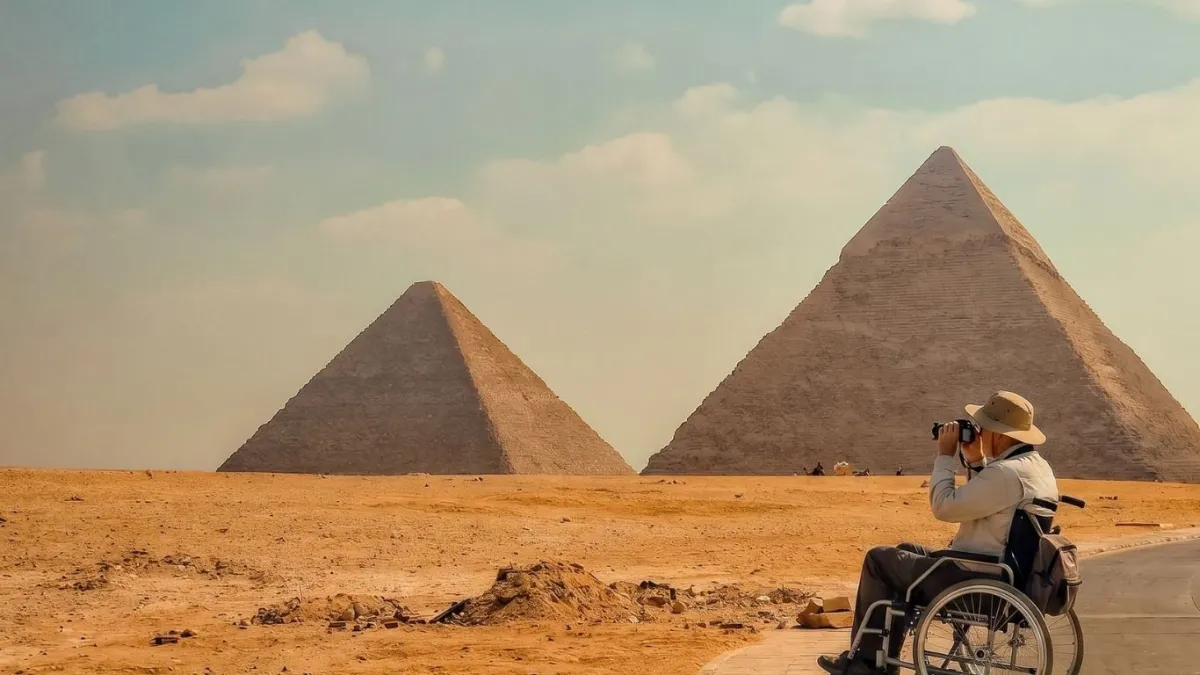
If you use a wheelchair or can only walk short distances, the tour should be checked individually.
More planning advice:
Back, Neck or Joint Problems
Unlike a desert safari, most driving is on normal roads.
Long periods of sitting can still be uncomfortable.
If you have significant back, hip or joint problems, extra breaks may help.
Mention these limitations before booking.
Older Travellers
Older travellers can also book the tour.
Personal fitness matters more than age alone.
The trip includes:
Very early start
Several long drives
Plenty of walking
High temperatures depending on season
Early departure for Abu Simbel
If you prefer a slower walking pace, a private tour can offer more flexibility than a large coach group.
What to Bring
For the three days, we recommend:
Passport
Comfortable closed shoes
Lightweight clothing
Sunglasses
Sun cream
Sun hat
Personal medication
Small overnight bag
Toiletries
Phone
Charging cable
Power bank
Camera
Light jacket during cooler months
Some cash for personal expenses
A large suitcase is usually unnecessary for two nights.
Clothing for Temples and Tombs
Comfortable lightweight clothing works well for most visits.
Ancient temples do not use the same clothing rules as mosques.
Very revealing beachwear is still not practical for a full cultural programme.
Closed shoes are useful on uneven ground.
Heat in Luxor, Aswan and Abu Simbel
Upper Egypt can become extremely hot, especially in summer.
Temperatures may be noticeably higher than on the Red Sea coast.
Important items include:
Regular water
Sun protection
Sun hat
Lightweight clothing
Shade breaks where possible
Abu Simbel in particular includes exposed outdoor areas with strong sun.
Drinks and Meals
The standard price includes:
2 breakfasts
3 lunches
Soft drinks in the vehicle
The live page lists the following as not included:
Drinks in hotels
Drinks in restaurants
If you have dietary requirements, mention them before the tour.
No Planned Shopping Stops
The tour page specifically states that there are no planned shopping stops.
That means the standard programme does not require visits to:
Alabaster shops
Papyrus shops
Perfume shops
Souvenir shops
Possible bazaar walks in Luxor or Aswan are different.
You decide whether you want to buy anything.
Included in the Price
Direct hotel pickup within the confirmed transfer area
Return transfer to your hotel
Private modern air-conditioned vehicles
German- or English-speaking qualified Egyptologist
Valley of the Kings
Three regularly open royal tombs
Hatshepsut Temple
Colossi of Memnon
Karnak Temple
One night in a 4-star hotel in Luxor
Breakfast in Luxor
Philae Temple
Motorboat to Philae Temple
Aswan High Dam
Unfinished Obelisk
Felucca sailing
One night in a 4-star hotel in Aswan
Breakfast in Aswan
Great Temple of Ramesses II at Abu Simbel
Temple of Queen Nefertari
Three lunches
Soft drinks in the vehicle
Entrance tickets for all attractions in the confirmed standard programme
Taxes and service charges
Not Included in the Standard Price
Entry to special tombs in the Valley of the Kings, such as Tutankhamun or Seti I
Drinks in hotels and restaurants
Personal expenses
Tips
Single room supplement of €40 per night
Extra services outside the confirmed standard programme
Possible transfer supplements for certain more distant Red Sea resorts
Who Is the Luxor Aswan Abu Simbel from Hurghada Tour For?
This tour may suit you well if you:
Want to combine Luxor, Aswan and Abu Simbel in one trip
Have a strong interest in ancient Egyptian history
Want to visit the Valley of the Kings
Want to see Philae and the Nile scenery around Aswan
Want to include Abu Simbel in the same 3-day programme
Prefer a private tour rather than a large group
Want a German- or English-speaking Egyptologist
Do not want planned shopping stops
Are comfortable with long driving times
If short driving days and plenty of hotel time are important to you, a longer tour with more overnight stays may be more comfortable.
Enquire About the Luxor Aswan Abu Simbel from Hurghada Tour
If you want to combine the main cultural sites of Luxor with Aswan and Abu Simbel, you can enquire about the private 3-day tour for your preferred date.
Tell us:
Travel date
Number of adults
Number and ages of children
Hotel name
Holiday resort
Preferred room arrangement
Dietary requirements
Mobility limitations
Any special tombs you want to visit in the Valley of the Kings
If you want to visit Tutankhamun, Seti I or another special tomb, mention this when making your enquiry.
Before booking, availability, final price, hotels, pickup time, room setup and the exact programme are confirmed.